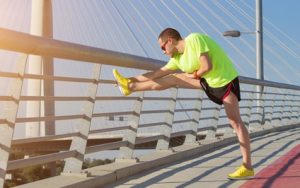
How to do the Splits
If you’ve ever dreamed of being able to do the splits like Bruce Lee, here’s my top 10 list of tips and tricks for achieving the splits without injury or pain.
by Brad Walker | Updated July 21, 2024
I need to be honest; I can’t do the splits. I’ve never had a desire to do them, nor have I ever needed to. And unless you’re involved in martial arts or gymnastics or ballet or cheerleading, there’s really no good reason you would need to do them either.
Very few sports require that level of extreme flexibility. In fact, that level of flexibility without the accompanying muscular strength and stability can lead to injury.
But regardless of all that; I get dozens of questions from all sorts of people who want to do the splits. So if you’ve ever dreamed of being able to do the splits like Bruce Lee or an Olympic gymnast, here’s my top 10 list of tips and tricks for achieving the splits without injury or pain.

1. Warm-up
Don’t stretch cold. Complete a thorough warm-up before attempting to do any training for the splits: Including a cardiovascular warm-up; some light static stretching; and dynamic stretching.
2. When to stretch
From tip number 1 you already know to stretch after you’ve warmed up, but when else should you stretch? One of the best times to stretch is after your workout, as part of your cool-down. This is when your muscles are most warm and pliable, which makes it much easier to stretch and reach new levels of flexibility. Another great time to stretch is just before going to bed. This works at a neuromuscular level, as the increased muscle length is the last thing your nervous system remembers before going to sleep.
3. Strength v’s flexibility
Strength and flexibility are interrelated. Muscle strength is crucial for joint stability, so if you’re trying to improve your flexibility to do the splits, but the muscles that stabilize your lower back, hips and legs are weak, all you’re doing is making yourself more vulnerable to injury. Work on the strength of your muscles and as that improves, especially at the end ranges of motion, so will your flexibility.
4. Include variety
If you want to achieve a full split, stretching just your groin and hamstrings aren’t enough. You need to stretch everything if you want to get into the splits. Don’t do the same old boring stretches all the time; include a variety of stretches for all your muscle groups; especially your lower back, hips, buttocks and calves.
5. Adjust the angles
I’ve already mentioned that you need to include a variety of stretches (tip 4), but let’s take that to the next level. During each stretch start to think about how you can make small changes to the stretch by adjusting your body position. For example; when doing a hamstring stretch turn your toes inward and then turn them outward, or twist your hips from one side to the other. These small adjustments target different areas of the same muscle, resulting in a more well rounded, overall flexibility.
6. Long hold static stretching
Static stretching is a great place to start, but most people make 2 mistakes when doing static stretching. Firstly, they push the stretch too hard. And secondly, they don’t stay in the stretch position for long enough (probably because they’re pushing the stretch too hard). When doing static stretching get into a position where you feel only light tension in the muscles, and then hold that position for at least 60 seconds.
7. PNF stretching
PNF (Proprioceptive Neuromuscular Facilitation) is a more advanced form of flexibility training that involves both the stretching and contraction of the muscle group being targeted. It is excellent for isolating specific muscle groups, and as well as increasing flexibility it also improves muscular strength (see tip 3).

8. Dynamic stretching
Dynamic stretching uses a controlled, soft bounce or swinging motion to move a particular body part to the limit of its range of movement. The force of the bounce or swing is gradually increased but should never become radical or uncontrolled. If you plan on using the splits for gymnastics, martial arts or any other sporting activity, then you also need to include dynamic stretching.
9. Breathing
Many people unconsciously hold their breath while stretching. This causes tension in the muscles, which in turn makes it very difficult to stretch. To avoid this, remember to breathe slowly and deeply during all stretching exercises. This helps to relax the muscles, promotes blood flow and increases the delivery of oxygen and nutrients to the muscles.
10. Practice, practice and more practice
Don’t kid yourself; you’re not going to achieve the full splits without some work. Aim to spend a minimum of two 20 minutes stretching sessions a day working on the splits, and depending on where you’re starting from it could take you 3 to 6 months to achieve your goal.
Research and References
- Walker, B. (2011). The Anatomy of Stretching, 2nd Edition (ISBN: 978-1583943717)
- Sang H. Kim (2004). Ultimate Flexibility, (ISBN: 978-1880336830)
- Hindle, K. Whitcomb, T. Briggs, W. Hong, J. (2012) PNF: Its Mechanisms and Effects on Range of Motion and Muscular Function. Journal of Human Kinetics. 31 pp. 105-13.
- Sharman, MJ. Cresswell, AG. Riek, S. (2006) PNF stretching: mechanisms and clinical implications. Sports Medicine. 36(11). Pp. 929-39.
 About the Author: Brad Walker is often referred to as the "Stretch Coach" and has even been called the Stretching Guru. Magazines such as Runners World, Bicycling, Triathlete, Swimming & Fitness, and Triathlon Sports have all featured his work. Amazon (author page) has listed his books on five Best-Seller lists. Google cites over 100,000 references to him and his work on the internet. And satisfied customers from 122 countries have sent 1,000's of verified customer reviews. If you want to know about stretching, flexibility or sports injury management, Brad Walker is the go-to-guy.
Disclaimer: The health and fitness information presented on this website is intended as an educational resource and is not intended as a substitute for proper medical advice. Please consult your physician or physical therapist before performing any of the exercises described on this website, particularly if you are pregnant, elderly or have any chronic or recurring muscle or joint pain.