Side Stitch (Exercise-Related Transient Abdominal Pain)
Discover the causes behind Side Stitches, their treatment and prevention.
by Brad Walker | Updated July 14, 2024
A side stitch, also known as ETAP (exercise-related transient abdominal pain), is one of the most common and annoying conditions suffered by participants of sport and exercise.
A side stitch causes an intense, stabbing pain under the lower edge of the ribcage and although it can occur on both sides of the abdomen, research has found that it occurs more frequently on the right side.
Although not considered a true sports injury, it is estimated that 70% of regular runners suffered from a side stitch in the last 12 months.

What Causes a Side Stitch?
Pain from a side stitch is usually caused by vigorous exercise and activity. Side stitches occur more frequently in sports that require a lot of up and down movement, like running, jumping and horse riding. They also occur more frequently in novice or amateur athletes.
The pain is caused by a spasm of the diaphragm muscle. The diaphragm is a dome shaped muscle that separates the thoracic (lung) cavity from the abdominal cavity and moves up and down when you inhale and exhale.
Anatomy of a Side Stitch
To understand why the diaphragm muscle spasms, we need to understand what is happening during exercise: Let’s use the sport of running as an example.
It is interesting to note that more than 70% of humans exhale when their left foot strikes the ground, while less than 30% exhale when their right foot hits the ground.
When you inhale, your lungs fill with air and force your diaphragm downward. Conversely, when you exhale, your lungs contract and your diaphragm rises. This pattern of rising and falling occurs quite rapidly when you’re running and as most side stitches occur on the right-hand side, consider what happens to your diaphragm when your right foot strikes the ground.
As your right foot strikes the ground, gravity forces your internal organs downward. Some of these organs are attached to the diaphragm, which in turn pulls the diaphragm downward. Now, if you’re also exhaling at the same time as your right foot hits the ground, your diaphragm is being pulled upward as your lungs contract. This creates a stretching of the diaphragm muscle and the ligaments attached to your internal organs, which in turn causes the pain.
Treatment
Like any other muscle spasm, when a side stitch occurs it is important to stop the activity that brought the stitch on in the first place, or at the very least reduce the intensity of the activity.
Also, try gently stretching the effected side by leaning away from the stitch.
Another effective treatment for a side stitch is to alter your breathing pattern. First concentrate on taking full, deep breathes and avoid shallow breathing. Then, if you are one of those people who exhale when your right foot hits the ground, try instead to exhale when your left foot hits the ground.
Prevention
There are a number of measures that help to prevent side stitch, the main ones being:
- Improve your cardiovascular fitness.
- Concentrate on breathing deeply during exercise.
- Warm-up properly before exercising.
- Gradually increase exercise intensity.
- Avoid eating before exercising.
- Drink more fluids.
- Strengthen your core muscles (lower back, abdominal and oblique muscles).
- Stretch more, especially your lower back and abdominal muscles (see below).
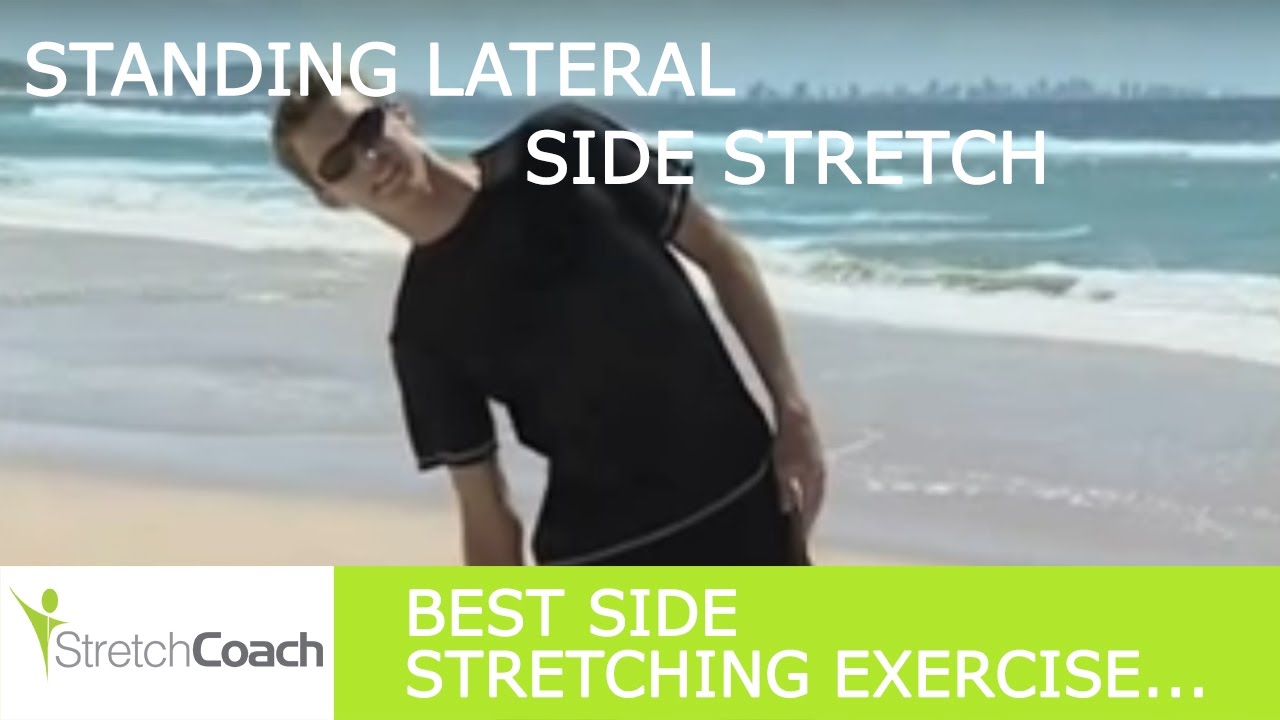
Standing Lateral Side Stretch (1:21) Stand with your feet about shoulder width apart and look forward. Keep your body upright and slowly bend to the left or right. Reach down your leg with your hand and do not bend forward. Don’t lean forward or backward, concentrate on keeping your upper body straight. Hold the stretch position for a minimum of 20 seconds and then repeat on the opposite side.

Rising Stomach Stretch (0:57) Lie face down and bring your hands close to your shoulders. Keep your hips on the ground, look forward and rise up by straightening your arms. Hold the stretch position for a minimum of 20 seconds.
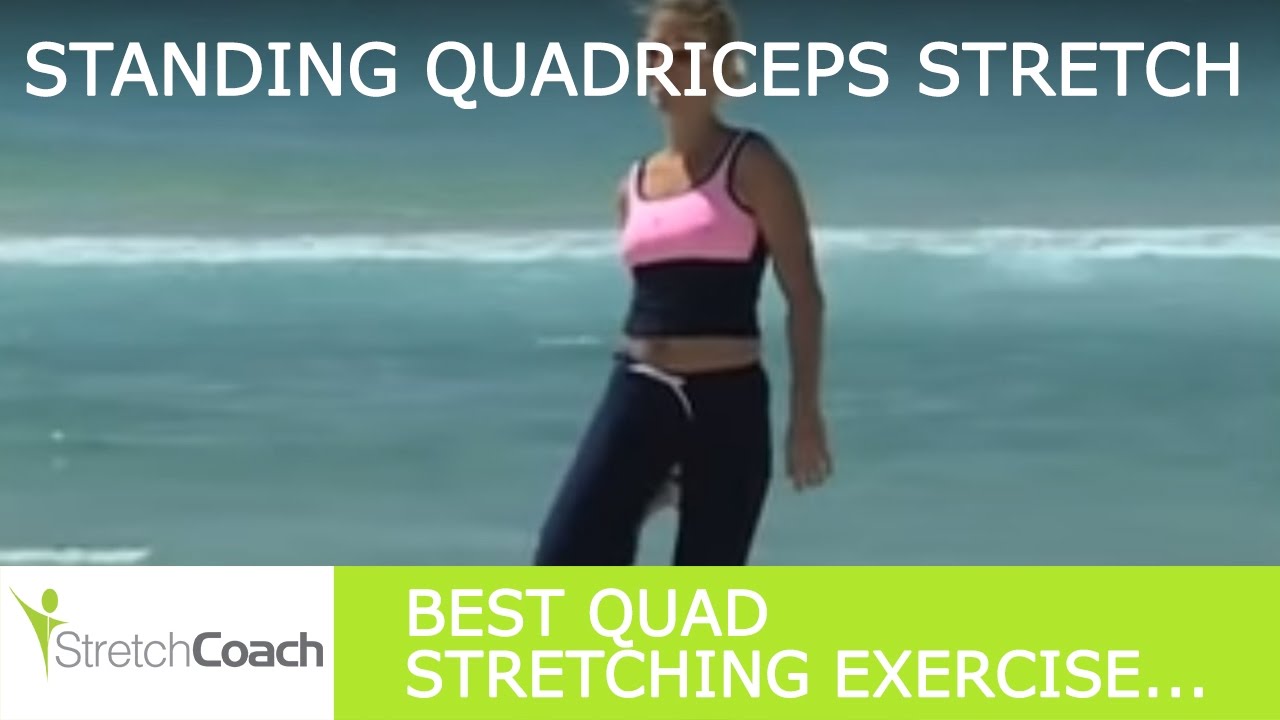
Standing Quad and Hip Stretch (1:20) Stand upright while balancing on one leg. Pull your other foot up behind your buttocks and keep your knees together while pushing your hips forward. Hold on to something for balance if needed. Hold the stretch position for a minimum of 20 seconds and then repeat on the opposite side.

Rotating Stomach Stretch (1:24) Lie face down and bring your hands close to your shoulders. Keep your hips on the ground, look forward and rise up by straightening your arms. Then slowly bend one arm and rotate that shoulder towards the ground. Hold the stretch position for a minimum of 20 seconds and then repeat on the opposite side.
Research and References
- Martini, F. Tallitsch, R. Nath, J. (2009) Human Anatomy, 9th Edition (ISBN: 978-013432076X)
- McCrory, P. (2007). A stitch in time. British Journal of Sports Medicone, Mar;41(3):125.
- Plunkett, B. Hopkins, W. (1999). Investigation of the side pain “stitch” induced by running after fluid ingestion. Medicine & Science in Sports & Exercise, 31(8):1169-1175.
- Tortora, G. Derrickson, B. (2009) Principles of Anatomy and Physiology, 14th Edition (ISBN: 978-1118866096)
- Walker, B. (2011). The Anatomy of Stretching, 2nd Edition (ISBN: 978-1583943717)
- Wikipedia contributors. (2022, April 6). Side stitch, In Wikipedia, The Free Encyclopedia.
 About the Author: Brad Walker is often referred to as the "Stretch Coach" and has even been called the Stretching Guru. Magazines such as Runners World, Bicycling, Triathlete, Swimming & Fitness, and Triathlon Sports have all featured his work. Amazon (author page) has listed his books on five Best-Seller lists. Google cites over 100,000 references to him and his work on the internet. And satisfied customers from 122 countries have sent 1,000's of verified customer reviews. If you want to know about stretching, flexibility or sports injury management, Brad Walker is the go-to-guy.
Disclaimer: The health and fitness information presented on this website is intended as an educational resource and is not intended as a substitute for proper medical advice. Please consult your physician or physical therapist before performing any of the exercises described on this website, particularly if you are pregnant, elderly or have any chronic or recurring muscle or joint pain.