Treating Compartment Syndrome
Discover the causes behind compartment syndrome, plus effective treatment and prevention strategies.
by Brad Walker | Updated September 27, 2022
Compartment syndrome is a condition that develops when the pressure inside the fascia surrounding the muscles and bones increases without relief.
Compartment syndrome can develop in any of the compartments in the body, but is most common in the legs, particularly the lower leg.
The condition may develop acutely, from an injury or other cause of immediate swelling, or chronically, because of overuse or other chronic swelling.

What is Compartment Syndrome, (plus Anatomy)?
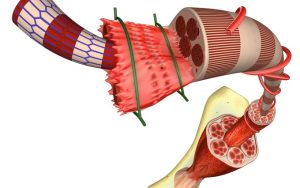
Muscles are covered by tough fibrous tissue called fascia. This tissue wraps around the muscles and accompanying bone, and holds it in place, forming a compartment. The fascia is large enough to accommodate the bones, nerves, blood vessels, and muscles at their current size. There is just enough stretch in the fascia to allow for the normal expansion of the muscle from increased blood flow due to exercise.
However, if the muscle swells or blood collects inside the compartment, the pressure will increase. If the pressure exceeds that of the capillaries (usually around 30 mmHG) they will begin to die. This in turn will cause death to the nerve and muscle tissue around them due to loss of blood supply.
Types of Compartment Syndrome
- Acute compartment syndrome involves a trauma to the muscle or bone within any of the compartments. The trauma then causes bleeding or swelling and increases the internal pressure (sometimes within minutes, other times over a period of hours). Since the fascia around the muscle cannot expand enough to accommodate the increase in size, the pressure will rise. As there is no way for the pressure to release it will continue to rise until the tissues are destroyed. Acute compartment syndrome may also occur post-surgery from a blood flow blockage, or even rapid muscle growth from anabolic steroid use.
- Chronic compartment syndrome results from overuse or repetitive stresses to the muscle inside the compartment. When a muscle is worked it becomes engorged with blood causing it to swell. When minor trauma from overwork or repetitive stresses causes the muscle to continue to swell it may become too large for the surrounding fascia thereby increasing the pressure in the compartment. This pressure will begin to diminish after the exercise is stopped, although it may stay up for some time after.
Athletes involved in high impact collision and contact sports, such as football and rugby, are more susceptible to acute compartment syndrome, while those involved in repetitive activities, such as running and jumping, are more vulnerable to chronic compartment syndrome.
Anterior and Posterior Compartment Syndrome
Compartment syndrome is most common in the lower leg, although it can happen along any long bone, especially with a fracture. The quadriceps muscle is another candidate for this condition but due to its size and the lesser incidence of injury it is still far less common than lower leg compartment syndrome.
In the lower leg, compartment syndrome usually involves either the anterior compartment, over the front lateral side of the shin, or one of the posterior compartments, behind the tibia. The posterior area consists of the superficial compartment and the deep compartment. The lateral compartment is the fourth compartment in the lower leg. The anterior compartment is the most injured of the four compartments.
The anterior compartment houses the tibialis anterior, extensor digitorum longus, extensor hallicus longus, and the peroneus tertius muscles and is bordered by the tibia and fibula. The superficial posterior compartment covers the gastrocnemius, soleus, and plantaris muscles and is behind the tibia and fibula. The deep posterior compartment is tucked in between the tibia and fibula and contains the flexor digitorum longus, flexor hallicus longus, popliteus and the tibialis posterior. Also running through this compartment are the posterior tibial artery and vein along with the tibial nerve.
Causes of Compartment Syndrome
Acute compartment syndrome is caused by trauma to the structures in the compartment. Any of the following may be a cause:
- Fracture to the bone.
- Tearing of the muscle.
- Crush injury.
- Blood flow blockage; due to injury or clots.
- Post-surgical swelling or bleeding.
- Anabolic steroid use.
- Extreme increase in activity level; increases mileage or speed workouts too quickly.
Chronic compartment syndrome results from repetitive trauma and overuse. The following are potential causes:
- Running; especially on hard surfaces or a change of surface.
- Use of braces, wrapping or taping that is too tight.
- Muscle hypertrophy due to exercise without the accompanying fascia expansion.
- Repetitive stress that results in intra-compartment pressure not returning to normal during rest.
Signs and Symptoms
Pain, numbness, a feeling of pressure, and swelling usually accompany this condition. The pain may be out of proportion for the injury, especially if there is no fracture. Exercise will cause the pain to increase, and the pain may diminish with rest.
Tenderness and swelling may also occur in the affected compartment. A tingling or burning sensation may be felt along with a tight or full feeling in the muscle. The muscles may also be weak and inflexible.
Treatment
Acute compartment syndrome is a medical emergency and should be treated by a physician, whereas the chronic condition, although still painful and a danger to the blood vessels and nerves, can be treated more conservatively. Both conditions must be treated, however, to prevent permanent damage to the injured area and those distal to the injury as well.
- Acute compartment syndrome may be treated with ice, sports massage, anti-inflammatory medications (NSAID), and immobilization. For more serious cases or for those that do not respond to these treatments the injury may require surgical intervention to heal. The fascia is cut open to allow the fluids to drain and relieve the pressure.
- Chronic compartment syndrome usually responds well to rest from activities that cause pain. Ice and elevation along with anti-inflammatory medications (NSAID) will help to control the swelling that causes the pressure. Sports massage may help to stretch the fascia to accommodate any swelling or growth of the muscle. It is important not to wrap the area since additional compression will only aggravate the problem. In extreme cases where the pressure stays elevated and does not respond to non-invasive treatment then surgery may be required to relieve the pressure and prevent further tissue damage.

Prevention
Prevention of compartment syndrome involves avoiding the activities that might lead to increased pressure in the compartment. Using the techniques below will also help prevent compartment syndrome.
- Warming the muscles properly will prepare it for the upcoming activity and allow a slow increase in muscle size. This will also minimize the chances of injury to the muscles. Warm packs and heat retaining coverings may be used to warm the area before an activity and keep it warm during exercise. Warm muscles are more flexible and less likely to be torn or injured.
- Activities that cause pain should be avoided or limited as much as possible. When new activities are added to the program it is important to note any pain and if they cannot be adjusted to relieve the pain they should be discontinued.
- Gradually increasing intensity and duration of activities is important. Rapidly increasing either intensity or duration without an adequate conditioning period can lead to trauma to the muscles and/or bones and cause injury that may lead to bleeding inside the compartment. By slowly increasing the workload the muscles, and surrounding fascia, will have time to adapt.
- It is important to allow adequate rest between intense workouts or training sessions. If adequate rest and recovery is not included, the stress may cause swelling and injury. Muscle tears and strains are often associated with inadequate rest between training sessions. The rest time also allows for the fascia to stretch and become accustomed to the increase in muscle size.
- Avoiding activities that cause direct trauma to any of the muscles or bones in the compartment will also help prevent compartment syndrome. Using appropriate padding and protection will help to prevent the injuries that might lead to this condition.
- Strengthening the muscles also helps protect the compartment and the bones and muscles in the compartment. Stronger muscles are less likely to be injured and they offer better shock absorption for the bones.
- And stretching the muscles will help relieve pressure within the compartment. Stretching the muscle causes it to lengthen therefore reducing its thickness and decreasing pressure. Flexible muscles are also less susceptible to injury.
Research and References
- Bahr, R. Maehlum, S. (2004) Clinical Guide to Sports Injuries, 1st Edition (ISBN: 978-0736041171)
- Barnes, M. (1997, March). Diagnosis and management of chronic compartment syndromes: a review of the literature. British Journal of Sports Medicine, 31(1):21-7.
- Guo, J. Yin, Y. Jin, L. Zhang, R. Hou, Z. Zhang, Y. (2019, July). Acute compartment syndrome: Cause, diagnosis, and new viewpoint. Medicine, 98(27):e16260.
- Martini, F. Tallitsch, R. Nath, J. (2009) Human Anatomy, 9th Edition (ISBN: 978-013432076X)
- Mubarak, S. Pedowitz, R. Hargens, A. (1989, February). Compartment Syndromes. Current Orthopeadics, 3:36-40.
- Torlincasi, A. Lopez, R. Waseem, M. (2022). Acute Compartment Syndrome. StatPearls Publishing, 2022 Jan.
- Tortora, G. Derrickson, B. (2009) Principles of Anatomy and Physiology, 14th Edition (ISBN: 978-1118866096)
- Via, AG. Oliva, F. Spoliti, M. Maffulli, N. (2015, March 27). Acute compartment syndrome. Muscles, Ligaments and Tendons Journal, 5(1):18–22.
- Walker, B. (2018). The Anatomy of Sports Injuries, 2nd Edition (ISBN: 978-1623172831)
- Wikipedia contributors. (2022, June 28). Compartment syndrome, In Wikipedia, The Free Encyclopedia.
 About the Author: Brad Walker is often referred to as the "Stretch Coach" and has even been called the Stretching Guru. Magazines such as Runners World, Bicycling, Triathlete, Swimming & Fitness, and Triathlon Sports have all featured his work. Amazon (author page) has listed his books on five Best-Seller lists. Google cites over 100,000 references to him and his work on the internet. And satisfied customers from 122 countries have sent 1,000's of verified customer reviews. If you want to know about stretching, flexibility or sports injury management, Brad Walker is the go-to-guy.
Disclaimer: The health and fitness information presented on this website is intended as an educational resource and is not intended as a substitute for proper medical advice. Please consult your physician or physical therapist before performing any of the exercises described on this website, particularly if you are pregnant, elderly or have any chronic or recurring muscle or joint pain.