
What is a Warm-Up and How to Warm-Up Properly?
Warm-up properly and reduce the risk of sports injury with these warm-up exercises and stretches.
by Brad Walker | Updated September 30, 2024
The warm-up exercises are crucial to any sports or fitness training program. The importance of a structured warm-up routine should not be under estimated when it comes to preventing sports injury.
A proper warm-up has a number of very important key components. These components, or parts, should all work together to prepare the individual for sports performance and minimize the likelihood of sports injury from physical activity.

What is a Warm-Up?
A warm-up (as it relates to physical activity and exercise) is any activity, either physical or mental, that helps to prepare an individual for the demands of their chosen sport or exercise.
Watch the Video for a Summary of This Article

Why Warm-Up?
Warming-up prior to any physical activity does a number of beneficial things, but the main purpose of the warm-up is to prepare the body and mind for strenuous activity.
- One of the ways it achieves this is by increasing the body’s core temperature, while also increasing the body’s muscle temperature. By increasing muscle temperature you’re helping to make the muscles loose, supple and pliable.
- Warm-up exercises also have the effect of increasing both your heart rate and your respiratory rate. This increases blood flow, which in turn increases the delivery of oxygen and nutrients to the working muscles.
All this helps to prepare the muscles, tendons and joints for more strenuous activity.
Warm-Up Stretching Guidelines
As with most warm-up activities there are rules and guidelines to ensure that they are safe; stretching and the warm-up is no exception. Stretching can be extremely dangerous and harmful if done incorrectly. This short video shows you how to warm up properly to get the most out of your warm up exercise routine.

The Greatest Misconception
Confusion about what stretching accomplishes, as part of the warm-up, is causing many to abandon stretching altogether. The key to understanding the role stretching plays can be found in the previous sentence. But, you have to read it carefully.
Stretching, as part of the warm-up! Stretching is a critical part of the warm-up, but stretching is not THE warm-up. Don’t make the mistake of thinking that doing a few stretches constitutes a warm-up.
An effective warm-up has a number of very important key components, which work together to minimize the likelihood of sports injury and prepare the individual for physical activity. The warm up meaning includes recognizing that each part of the warm-up plays a vital role in overall preparation.
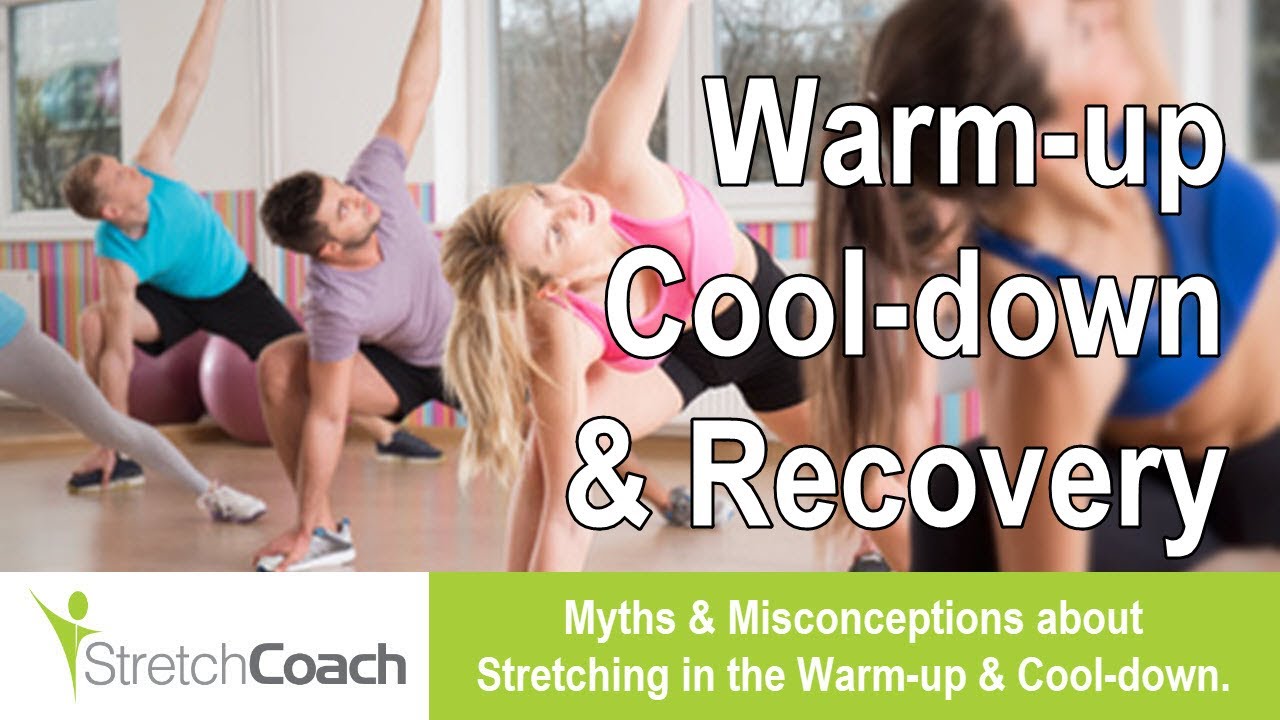
How to Structure Your Warm-Up?
It’s important to start with the easiest and most gentle activity first, building upon each part with more energetic warm-up activities, until the body is at a physical and mental peak. This is the state in which the body is most prepared for the physical activity to come, and where the likelihood of sports injury has been minimized as much as possible. So, how should you structure your warm-up exercise to achieve these goals?
There are four key components, or parts, which should be included to ensure an effective and complete warm-up. They are:
- The general warm-up;
- Static stretching;
- The sports specific warm-up; and
- Dynamic stretching.
Important: All four parts are equally important and any one part should not be neglected or thought of as not necessary. All four components work together to bring the body and mind to a physical peak, ensuring the athlete is prepared for the activity to come. This process will help ensure the athlete has a minimal risk of sports injury.
The 4 Key Components of a Warm-Up
Identifying the components of an effective and safe warm-up, and executing them in the correct order is critical. Remember, stretching is only one part of an effective warm-up and its’ place in the warm-up routine is specific and dependent on the other components.
The four key components that should be included to ensure an effective and complete warm-up are:
1. General warm-up
The general warm-up should consist of a light physical activity, like walking, jogging, easy swimming, stationary bike riding, skipping or easy aerobics. Both the intensity and duration of the general warm-up (or how hard and how long), should be governed by the fitness level of the participating athlete. Although a correct general warm-up for the average person should take about five to ten minutes and result in a light sweat.
The aim of the general warm-up is simply to elevate the heart rate and respiratory rate. This in turn increases the blood flow and helps with the transportation of oxygen and nutrients to the working muscles. This also helps to increase the muscle temperature, allowing for a more effective static stretch. Which bring us to part two.
2. Static stretching
Yes, Static stretching! (Short-hold static stretching of 5 – 10 seconds) This is a very safe and effective form of basic stretching. There is a limited threat of injury and it is extremely beneficial for overall flexibility. During this part of the warm-up, static stretching should include all the major muscle groups, and this entire part should last for about five to ten minutes.
There’s quite a bit of controversy about whether static stretching should be included in the warm-up, and recent studies have shown that static stretching may have an adverse effect on muscle contraction speed and therefore impair performance of athletes involved in sports requiring high levels of power and speed. It is for this reason that static stretching is conducted early in the warm-up procedure and is always followed by sports specific drills and dynamic stretching.
This part of the warm-up is extremely important, as it helps to lengthen both the muscles and tendons, which in turn allows your limbs a greater range of movement. This is very important in the prevention of muscle and tendon injuries (see related articles below).
The above two components form the basis, or foundation for a complete and effective warm-up. It is extremely important that these two components be completed properly before moving onto the next two components. The proper completion of components one and two, will now allow for the more specific and vigorous activities necessary for components three and four.
- Taylor, K. Sheppard, J. Lee, H. Plummer, N. (2009). Negative effect of static stretching restored when combined with a sport specific warm-up component. Journal of Science and Medicine in Sport, 12(6):657-61.
3. Sport specific warm-up
With the first two parts of the warm-up carried out thoroughly and correctly, it is now safe to move onto the third part of an effective warm-up. In this part, the athlete is specifically preparing their body for the demands of their particular sport. During this part of the warm-up, more vigorous activity should be employed. Activities should reflect the type of movements and actions that will be required during the sporting event, including sports specific drills and technical drills.
4. Dynamic stretching
Finally, a correct warm-up should finish with a series of dynamic stretches. However, this form of stretching carries with it an increased risk of injury if used incorrectly. Dynamic stretching is most effective after a moderate to high level of general flexibility has been established.
Dynamic stretching involves a controlled, soft bounce or swinging motion to move a particular body part to the limit of its range of movement. The force of the bounce or swing is gradually increased but should never become radical or uncontrolled. If you’ve never done any dynamic stretching before, please seek instruction and guidance from a professional sports coach or trainer before attempting dynamic stretching (see related articles below).
During this final part of an effective warm-up it is also important to keep the dynamic stretches specific to the athlete’s particular sport. This is the final part of the warm-up and should result in the athlete reaching a physical and mental peak. At this point the athlete is most prepared for the rigors of their sport or activity.
How Long Should I Warm-Up for?
The above information forms the basis of a complete and effective warm-up. However, I am well aware that this entire process is somewhat of an ‘ideal’ or ‘perfect’ warm-up. I am also well aware that this is not always possible or convenient in the real world. Therefore, the individual athlete must become responsible for assessing their own goals and adjusting their warm-up accordingly.
For instance, the time you commit to your warm-up should be relative to your level of involvement in your particular sport. So, for people just looking to increase their general level of health and fitness, a minimum of five to ten minutes would be enough. However, if you are involved in high level competitive sport you need to dedicate adequate time and effort to a complete warm-up.
Listen to the Warm-up Stretching Tips Audio
In this free audio presentation titled, Warm-up Stretching Tips, you’ll learn the important role stretching plays in the warm-up, plus how to incorporate the right types of stretching into your warm-up for peak performance and injury prevention.
To start listening to the Warm-up Stretching Tips Audio click on the speaker image. To download the MP3, right click on the image and choose “Save Target As…”

Research and References
- Andersen, J. (2005). Stretching Before and After Exercise: Effect on Muscle Soreness and Injury Risk. Journal of Athletic Training, 40(3), 218.
- Barroso, R. Silva-Batista, C. Tricoli, V. Roschel, H. Ugrinowitsch, C. (2013). The effects of different intensities and durations of the general warm-up on leg press 1RM. Journal of Strength and Conditioning Research, 27(4):1009-13.
- Beachle, T. Earle, R. (2008). Essentials of Strength Training and Conditioning, 3rd Edition (ISBN: 978-0736058032)
- Costa, P. Medeiros, H. Fukuda, D. (2011). Warm-up, Stretching, and Cool-down Strategies for Combat Sports. Strength & Conditioning Journal, 33(6), 71-79.
- Fradkin, A. Zazryn, T. Smoliga, J. (2010). Effects of warming-up on physical performance: a systematic review with meta-analysis. Journal of Strength and Conditioning Research, 24(1):140-8.
- Helms, E. Science & Application With Eric Helms (SAWEH) Episode 1 Warming up. Online Video Clip. YouTube. YouTube. Published May 4, 2016. Retrieved June 27, 2019.
- Nippard, J. Warm-Up and Mobility Science Explained (7 Studies). Online Video Clip. YouTube. YouTube. Published February 18, 2017. Retrieved June 27, 2019.
- Olsen, O. Sjøhaug, M. van Beekvelt, M. Mork, P. (2012). The effect of warm-up and cool-down exercise on delayed onset muscle soreness in the quadriceps muscle: a randomized controlled trial.. Journal of Human Kinetics, 35(1), 59-68.
- Shellock, F. Prentice, W. (1985). Warming-up and stretching for improved physical performance and prevention of sports-related injuries. Sports Medicine, 2(4):267-78.
- Taylor, K. Sheppard, J. Lee, H. Plummer, N. (2009). Negative effect of static stretching restored when combined with a sport specific warm-up component. Journal of Science and Medicine in Sport, 12(6):657-61.
- Walker, B. (2018). The Anatomy of Sports Injuries, 2nd Edition (ISBN: 978-1623172831)
- Wikipedia contributors. (2019, April 6). Warming up, In Wikipedia, The Free Encyclopedia.
 About the Author: Brad Walker is often referred to as the "Stretch Coach" and has even been called the Stretching Guru. Magazines such as Runners World, Bicycling, Triathlete, Swimming & Fitness, and Triathlon Sports have all featured his work. Amazon (author page) has listed his books on five Best-Seller lists. Google cites over 100,000 references to him and his work on the internet. And satisfied customers from 122 countries have sent 1,000's of verified customer reviews. If you want to know about stretching, flexibility or sports injury management, Brad Walker is the go-to-guy.
Disclaimer: The health and fitness information presented on this website is intended as an educational resource and is not intended as a substitute for proper medical advice. Please consult your physician or physical therapist before performing any of the exercises described on this website, particularly if you are pregnant, elderly or have any chronic or recurring muscle or joint pain.


