Thrower’s Elbow Treatment and Prevention
A Guide to the Treatment and Prevention of Thrower’s Elbow (AKA Pitcher’s Elbow).
by Brad Walker | Updated May 25, 2025
Although not as common as tennis elbow or golfers elbow, thrower’s elbow is just as debilitating and painful. The condition is most prevalent in baseball pitchers but is also common in any sport that requires a throwing motion, including cricket, javelin, tennis serving and volleyball spiking.
Unlike tennis elbow, which predominantly effects the lateral side (outside) of the elbow, and golfers elbow, which predominantly effects the medial side (inside) of the elbow, thrower’s elbow effects both the inside and outside of the elbow. Thrower’s elbow is sometimes referred to as Ulnar Collateral Ligament Injury.

What is Thrower’s Elbow?
Thrower’s elbow occurs when there is damage to the bones, muscles, tendons, and ligaments around the elbow joint and forearm. The throwing motion causes the structures on the medial side (inside) of the elbow to stretch, while at the same time compresses the structures on the lateral side (outside) of the elbow. Over time the constant compression on the lateral side can result in micro fractures in the arm bones and can eventually lead to bone spurs and bone chips. While the constant stretching on the medial side can result in severe ligament strain.
The damage eventually causes a restriction of movement, inflammation, and pain, and leads to the formation of scar tissue, bone spurs, and calcium deposits. If untreated, this damage can put so much pressure on the muscles and nerves that they can cut off the blood flow and pinch the nerves responsible for controlling the muscles in the forearm.
Anatomy of the Elbow
It is important to have a general understanding of the structures of the elbow joint, and how the muscles, tendons, ligaments, and bones aid the elbow joint in functioning properly.
As you can see from the diagram below, there are many muscles and tendons that make up the elbow joint and forearm. There are also three bones that make up the elbow joint. They are the Humerus, in the upper arm, and the Ulna and Radius in the lower arm or forearm.

What Causes Thrower’s Elbow?
By far the most common cause of thrower’s elbow is overuse. Any action that places a repetitive and prolonged strain on the forearm muscles, coupled with inadequate rest, will strain and overwork those muscles.
There are also many other causes, like a direct injury, such as a bump or fall onto the elbow. Poor technique with any throwing motion will contribute to the condition. Using ill-fitted equipment, like golf clubs, tennis racquets, work tools, etc. While poor levels of general fitness and conditioning will also contribute.
Signs and Symptoms
Pain is the most common and obvious symptom associated with thrower’s elbow. Pain is most often experienced on both sides of the elbow joint but can also be experienced anywhere from the elbow joint to the forearm and wrist.
Weakness, stiffness, and a general restriction of movement are also quite common in sufferers of thrower’s elbow. Even tingling and numbness can be experienced.
Thrower’s Elbow Injury Treatment
If you do suffer from thrower’s elbow, it is important that correct first aid principles are applied immediately. Thrower’s elbow is a soft tissue injury of the muscles and tendons around the elbow joint and therefore should be treated like any other soft tissue injury. Initial treatment should involve the R.I.C.E.R. regimen, which involves Rest, Ice, Compression, Elevation, and Referral to an appropriate professional for an accurate diagnosis.
Immediately following an injury, or at the onset of pain…
- Rest the injured limb, apply ice to the affected area, apply a compression bandage and elevate the limb if possible. This initial treatment needs to continue for at least 48 to 72 hours. This is the most critical time for the injured area; correct treatment now can mean the difference between a minor short-term injury or a permanent, re-occurring, debilitating injury.
- After the first 72 hours obtain a referral from a qualified professional and start a comprehensive rehabilitation program. This should include rehabilitation activities such as heat, massage, ultra-sound, and TENS (transcutaneous electrical nerve stimulation).
- Once most of the pain has gone start conditioning the muscles around the elbow with balance, strength, agility, and flexibility exercises and drills.
Preventing Thrower’s Elbow
Mark my words, “Prevention is much better than Cure.” Anything you can do to prevent an injury from occurring is worth it. Preventing a thrower’s elbow injury comes down to the conditioning of the muscles and tendons around the elbow, which ultimately involves improving both the strength and flexibility of the muscles and tendons.
There are several preventative techniques that will help to prevent thrower’s elbow, including bracing and strapping, modifying equipment, taking extended rests, and even learning new routines for repetitive activities. However, do not forget common injury prevention strategies like, warming up properly and using a bit of old-fashioned common-sense. Even if you don’t have an elbow injury now, the following suggestions will be helpful.
- Completely rehabilitate an elbow injury before returning to activity.
- Always include a general warm-up, followed by an activity specific warm-up before training and especially before competition.
- Cool down thoroughly after training and competition.
- Include a comprehensive strength training program for the shoulder and arm muscles. Watch the videos below for specifically exercises that relate to thrower’s elbow.
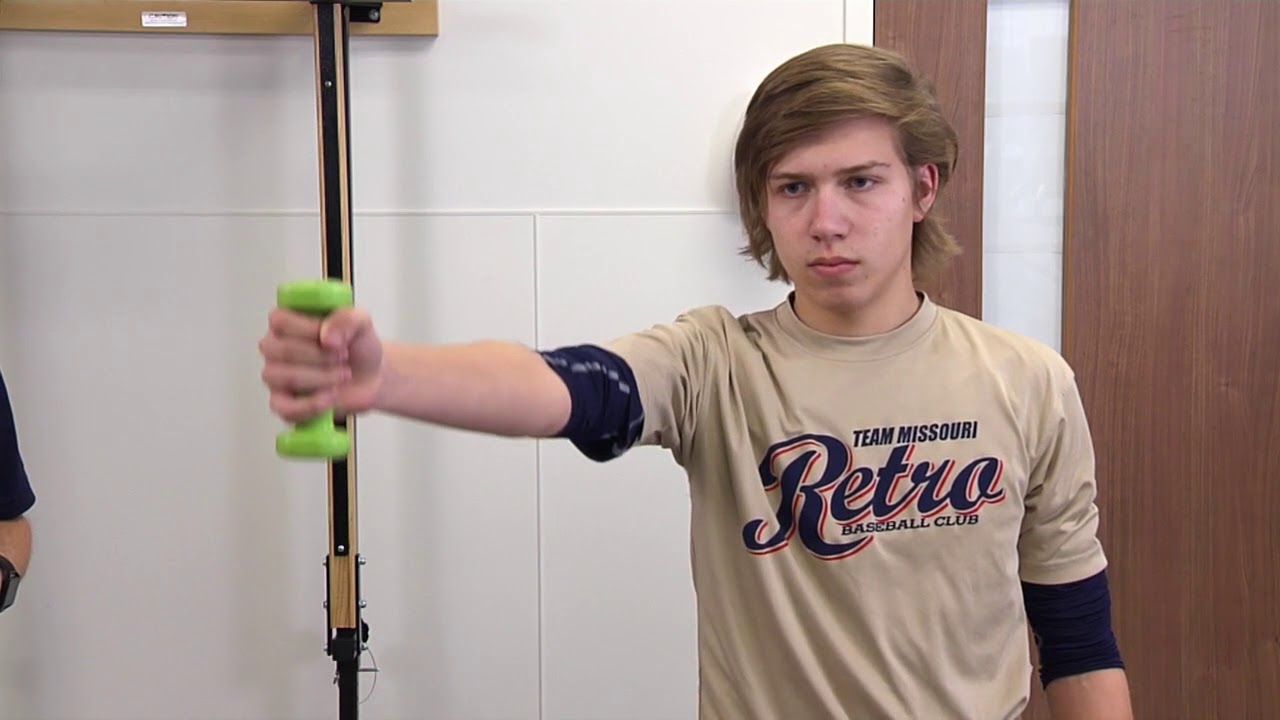

- Practice balance, agility, and proprioception drills to improve shoulder and elbow stability.
- Reduce the frequency of, or stop completely, any activities that aggravate the elbow.
- Rest in between training sessions or competition allows the body to heal minor injuries and repair the muscles to be ready for the next round of activity.
The best preventative measures involve a consistent program of increasing the strength and flexibility of the shoulder and arm muscles. Increasing flexibility will contribute greatly to the ability of the shoulder and arm muscles to resist strains and injury.
Research and References
- Bahr, R. Maehlum, S. (2004) Clinical Guide to Sports Injuries, 1st Edition (ISBN: 978-0736041171)
- Beachle, T. Earle, R. (2008). Essentials of Strength Training and Conditioning, 3rd Edition (ISBN: 978-0736058032)
- Langer, P. Fadale, P. Hulstyn, M. (2006). Evolution of the treatment options of ulnar collateral ligament injuries of the elbow. British Journal of Sports Medicine, 40(6): 499–506.
- Lippens, W. Javelin Thrower’s Elbow. Retrieved June 23, 2021, from https://www.physio-pedia.com/Javelin_Thrower’s_Elbow.
- Tortora, G. Derrickson, B. (2009) Principles of Anatomy and Physiology, 14th Edition (ISBN: 978-1118866096)
- Walker, B. (2018). The Anatomy of Sports Injuries, 2nd Edition (ISBN: 978-1623172831)
- Wells, M. Bell, G. (1995). Concerns on Little League Elbow. Journal of Athletic Training, 30(3): 249–253.
- Wilk, K. Macrina, L. Cain, L. Dugas, J. Andrews, J. (2012). Rehabilitation of the Overhead Athlete’s Elbow. Sports Health, 4(5): 404–414.
- Wilk, K. Reinold, M. Andrews, J. (2004). Rehabilitation of the thrower’s elbow. Clinics in Sports Med, 23: 765–801.
- Wikipedia contributors. (2021, May 8). Ulnar collateral ligament injury of the elbow, In Wikipedia, The Free Encyclopedia.
 About the Author: Brad Walker is often referred to as the "Stretch Coach" and has even been called the Stretching Guru. Magazines such as Runners World, Bicycling, Triathlete, Swimming & Fitness, and Triathlon Sports have all featured his work. Amazon (author page) has listed his books on five Best-Seller lists. Google cites over 100,000 references to him and his work on the internet. And satisfied customers from 122 countries have sent 1,000's of verified customer reviews. If you want to know about stretching, flexibility or sports injury management, Brad Walker is the go-to-guy.
Disclaimer: The health and fitness information presented on this website is intended as an educational resource and is not intended as a substitute for proper medical advice. Please consult your physician or physical therapist before performing any of the exercises described on this website, particularly if you are pregnant, elderly or have any chronic or recurring muscle or joint pain.