
The 3 Best Stretches for Wrestling
Improve your wrestling and minimize injuries with 3 of the best wrestling stretches.
by Brad Walker | Updated August 4, 2024
Out of hundreds of styles, there are four main international amateur competitive forms of wrestling:
- Greco-Roman wrestling;
- Freestyle wrestling;
- Judo wrestling; and
- Sombo wrestling (Not included in the Olympics yet).

Muscles used in Wrestling
Wrestling requires a great deal of muscular endurance and strength. The ability to move an opponent and control their body while maintaining one’s own balance and space requires a great deal of body control. Balance and muscle control are essential components of wrestling. A wrestler must be able to react to his or her opponent during moves and holds.
Upper and lower body strength is very important to the wrestler. Core strength will help a wrestler secure and maintain many holds, and at the same time escape holds by an opponent. Quickness and agility are also important keys to wrestling success. Overall conditioning is important to last the 2 minutes of grueling physical stress of each period.
Wrestlers use the following major muscle groups:
- The muscles of the shoulder girdle; the pectorals, the latissimus dorsi, the teres major, and the deltoids.
- The muscles of the upper legs and hips; the gluteals, the hamstrings, and the quadriceps.
- The muscles of the forearm and upper arm; the wrist flexors and extensors, the biceps, and the triceps.
- The core muscles; the rectus abdominus, obliques, and the spinal erectors.
- The muscles of the neck and the trapezius.
Most Common Wrestling Injuries
Wrestling is a contact sport in which the body is contorted into many different positions. This puts the muscles and joints under great stress. The repetitive training required to condition the body for matches can also lead to chronic injuries.
Like any contact sport wrestling can be dangerous. Rules have been implemented to reduce the danger, but there are still some common injuries associated with wrestling. These include:
- Knee injuries;
- Shoulder injuries;
- Neck injuries; and
- Nosebleed and cauliflower ear.

Injury Prevention Strategies
Wrestlers spend a lot of time preparing their bodies for the physical rigors of a match. A good overall conditioning program that includes muscular endurance and strength work, along with cardiovascular conditioning, and flexibility training is important for the wrestler to stay injury free. The main injury prevention strategies include:
- Wrestling under controlled conditions and supervision.
- Practice for how and when to use specific moves and holds.
- Always warm-up properly prior to training and especially competition.
- Allow an adequate cool-down period after training and competition.
- Strength and muscular endurance are both important to a wrestler, so a program that stresses both aspects will help a wrestler avoid injury.
- A good cardiovascular conditioning program that will help delay the onset of fatigue.
- Good flexibility training will help prepare a wrestler’s body for the various positions it may be forced into. Well stretched muscles will respond better to the constant stretching and contracting of a match.
The 3 Best Stretches for Wrestling
Wrestling stretches are one of the most under-utilized techniques for improving athletic performance, preventing sports injury and properly rehabilitating sprain and strain injury. Don’t make the mistake of thinking that something as simple as stretching won’t be effective.
As with any sport or activity there are rules and guidelines to ensure that they are safe. Stretching is no exception. Stretching can be harmful and cause injury if done incorrectly. It is vitally important that the following stretching guidelines be adhered to, both for safety and for maximizing the benefits of the stretches below.
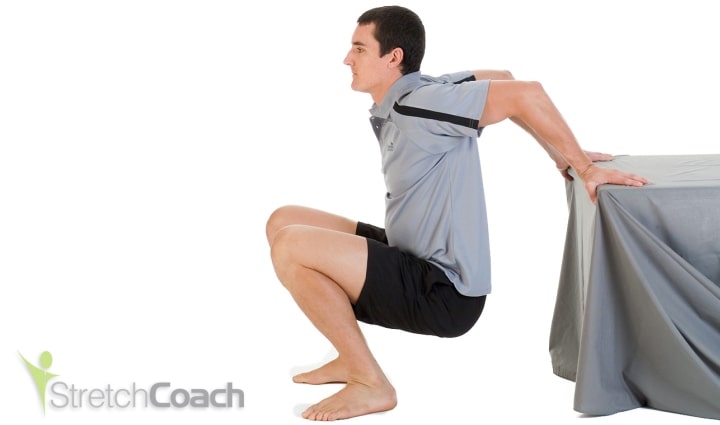
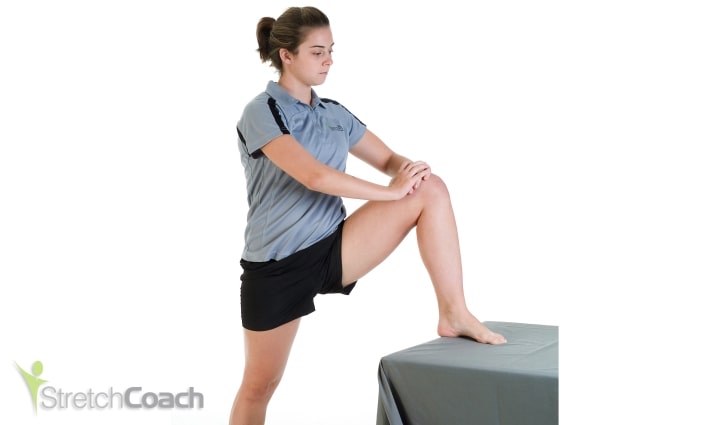
Below are 3 of the best stretches for wrestling; obviously there are a lot more, but these are a great place to start. Please make special note of the instructions with each stretch, and if you currently have any chronic or recurring muscle or joint pain please take extra care when performing the stretches below, or consult with your physician or physical therapist before performing any of the following stretches.
Instructions: Slowly move into the stretch position until you feel a tension of about 7 out of 10. If you feel pain or discomfort you’ve pushed the stretch too far; back out of the stretch immediately. Hold the stretch position for 20 to 30 seconds while relaxing and breathing deeply. Come out of the stretch carefully and perform the stretch on the opposite side if necessary. Repeat 2 or 3 times.

Research and References
- Walker, B. (2011). The Anatomy of Stretching, 2nd Edition (ISBN: 978-1583943717)
- Wikipedia contributors. (2019, April 28). Wrestling, In Wikipedia, The Free Encyclopedia.
- Myers, R. Linakis, S. Mello, M. Linakis, J. (2010). Competitive wrestling-related injuries in school aged athletes in US emergency departments. Western Journal of Emergency Medicine, 11(5), 442.
- Yard, E. Collins, C. Dick, R. Comstock, R. (2008). An epidemiologic comparison of high school and college wrestling injuries. The American Journal of Sports Medicine, 36(1), 57-64.
- Jarrett, G. Orwin, J. Dick, R. (1998). Injuries in collegiate wrestling. The American Journal of Sports Medicine, 26(5), 674-680.
- Kokkonen, J. Nelson, A. Eldredge, C. Winchester, J. (2007) Chronic Static Stretching Improves Exercise Performance. Medicine & Science in Sports & Exercise, 39(10), 1825-1831.
- Shellock, F, Prentice, W. (1985) Warming-up and stretching for improved physical performance and prevention of sports-related injuries. Sports Medicine, 2(4):267-78.
- Fradkin, A. Zazryn, T. Smoliga, J. (2010) Effects of warming-up on physical performance: a systematic review with meta-analysis. Journal of Strength and Conditioning Research, 24(1):140-8.
 About the Author: Brad Walker is often referred to as the "Stretch Coach" and has even been called the Stretching Guru. Magazines such as Runners World, Bicycling, Triathlete, Swimming & Fitness, and Triathlon Sports have all featured his work. Amazon (author page) has listed his books on five Best-Seller lists. Google cites over 100,000 references to him and his work on the internet. And satisfied customers from 122 countries have sent 1,000's of verified customer reviews. If you want to know about stretching, flexibility or sports injury management, Brad Walker is the go-to-guy.
Disclaimer: The health and fitness information presented on this website is intended as an educational resource and is not intended as a substitute for proper medical advice. Please consult your physician or physical therapist before performing any of the exercises described on this website, particularly if you are pregnant, elderly or have any chronic or recurring muscle or joint pain.


