The 3 Best Stretches for Sailing
Improve your sailing and minimize injuries with 3 of the best sailing stretches.
by Brad Walker | Updated October 15, 2024
The boats have changed greatly over the years, making use of a host of different masts, sails and keel designs. The only constant is that a sailboat must rely on the wind to move.

Muscles used in Sailing
Regardless of the size of the craft, sailing will require all the upper body strength you can muster. From the keel to the mainsail, your upper torso, including your shoulders, arms, and abdominal muscles will play a major role in operating a sailboat.
You must have a strong lower back and core to absorb the strain of pulling ropes and wrestling with the keel. Utilizing the muscles in your upper arms and shoulders will provide the power to tack and trim sails as needed. The main muscles in play are the rhomboids, trapezius, and rotator cuff in the shoulders, and the deltoids of the upper arms. The biceps and triceps provide the impetus of the pull, working against the wind to keep the boat on course and tacking in the right direction.
Most Common Sailing Injuries
When boating, you need to be aware of everything that is going on around you. The most common injuries in sailing come from accidents, and include:
- Rope burns;
- Hypothermia (from extreme exposure);
- Drowning (from being swept overboard);
- Concussion;
- Muscle bruises and contusions;
- Wrist and hand fractures;
- Upper and lower back strain, including disc injuries;
- Shoulder injuries, including rotator cuff tears and shoulder dislocation;
- Knee injuries, including Anterior Cruciate Ligament (ACL) sprain and meniscus tear; and
- Ankle sprain.

Injury Prevention Strategies
First and foremost, before you go out to sail you need to do two important things: Tell someone that you are going; and put on a flotation device. Here are a few other things to consider:
- Conduct a warm-up, including some gentle stretches, prior to getting on the boat.
- Cool down after sailing with some basic sailing stretches.
- A good overall conditioning program to strengthen the muscles mentioned above will help prevent many of the strain and sprain type injuries common to sailing.
- Incorporate cardiovascular training to prevent fatigue during long days and nights spent sailing.
- A comprehensive set of sailing stretches, with emphasis on the lower back, shoulders and arms, will help avoid many of the injuries common to sailing.
- Proper training on water safety and swimming will help prevent drowning or near-drowning injuries.
- Research the weather conditions before leaving and dress appropriately.
- Make sure that all ropes are coiled up and stowed safely away if not in use, and keep track of the ones that are in use once you are underway.
- Communication between people on a boat is very important, and literally giving your mates a heads up when moving the boom can be the difference between life and death on a sailboat.
- If possible, take frequent breaks and change positions during long periods of sailing. This will help prevent the muscles from becoming tight and causing pain.
- Stay well hydrated by drinking water every 20-30 minutes even if you do not feel thirsty. Dehydration leads to fatigue, nausea, and disorientation, all factors that can result in slips and falls.
The 3 Best Stretches for Sailing
Sailing stretches are one of the most under-utilized techniques for improving athletic performance, preventing sports injury and properly rehabilitating sprain and strain injury. Don’t make the mistake of thinking that something as simple as stretching won’t be effective.
As with any sport or activity there are rules and guidelines to ensure that they are safe. Stretching is no exception. Stretching can be harmful and cause injury if done incorrectly. It is vitally important that the following stretching guidelines be adhered to, both for safety and for maximizing the benefits of the stretches below.
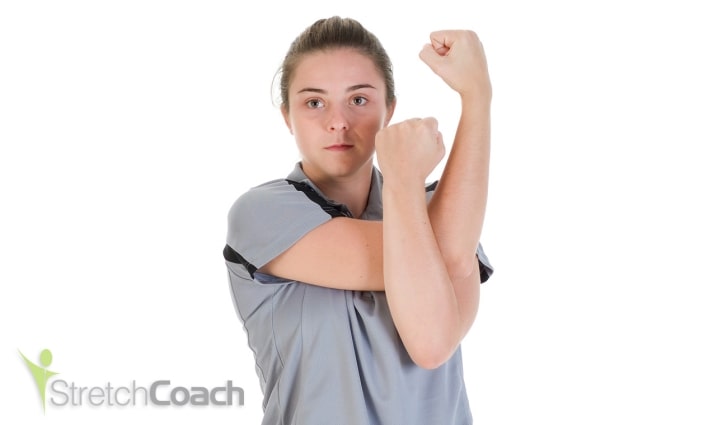
Below are 3 of the best stretches for sailing; obviously there are a lot more, but these are a great place to start. Please make special note of the instructions with each stretch, and if you currently have any chronic or recurring muscle or joint pain please take extra care when performing the stretches below, or consult with your physician or physical therapist before performing any of the following stretches.
Instructions: Slowly move into the stretch position until you feel a tension of about 7 out of 10. If you feel pain or discomfort you’ve pushed the stretch too far; back out of the stretch immediately. Hold the stretch position for 20 to 30 seconds while relaxing and breathing deeply. Come out of the stretch carefully and perform the stretch on the opposite side if necessary. Repeat 2 or 3 times.


Research and References
- Walker, B. (2011). The Anatomy of Stretching, 2nd Edition (ISBN: 978-1583943717)
- Wikipedia contributors. (2019, April 9). Sailing, In Wikipedia, The Free Encyclopedia.
- Allen, J. De Jong, M. (2006). Sailing and sports medicine: a literature review. British Journal of Sports Medicine, 40(7), 587-593.
- Nathanson, A. Baird, J. Mello, M. (2010). Sailing injury and illness: results of an online survey. Wilderness & Environmental Medicine, 21(4), 291-297.
- Hadala, M. Barrios, C. (2009). Different strategies for sports injury prevention in an America’s Cup yachting crew. Medicine & Science in Sports & Exercise, 41(8), 1587-1596.
- Kokkonen, J. Nelson, A. Eldredge, C. Winchester, J. (2007) Chronic Static Stretching Improves Exercise Performance. Medicine & Science in Sports & Exercise, 39(10), 1825-1831.
- Shellock, F, Prentice, W. (1985) Warming-up and stretching for improved physical performance and prevention of sports-related injuries. Sports Medicine, 2(4):267-78.
- Fradkin, A. Zazryn, T. Smoliga, J. (2010) Effects of warming-up on physical performance: a systematic review with meta-analysis. Journal of Strength and Conditioning Research, 24(1):140-8.
 About the Author: Brad Walker is often referred to as the "Stretch Coach" and has even been called the Stretching Guru. Magazines such as Runners World, Bicycling, Triathlete, Swimming & Fitness, and Triathlon Sports have all featured his work. Amazon (author page) has listed his books on five Best-Seller lists. Google cites over 100,000 references to him and his work on the internet. And satisfied customers from 122 countries have sent 1,000's of verified customer reviews. If you want to know about stretching, flexibility or sports injury management, Brad Walker is the go-to-guy.
Disclaimer: The health and fitness information presented on this website is intended as an educational resource and is not intended as a substitute for proper medical advice. Please consult your physician or physical therapist before performing any of the exercises described on this website, particularly if you are pregnant, elderly or have any chronic or recurring muscle or joint pain.