The 3 Best Stretches for Roller Derby
Improve your roller derby and minimize injuries with 3 of the best roller derby stretches.
by Brad Walker | Updated October 14, 2024
Roller derby was originally created in the 1930’s by Leo Seltzer at the Coliseum in Chicago, and was first televised in the 1940’s. During the late 1960’s and early 1970’s, televised roller derby was the most popular entertainment on television.
Roller derby today is comprised of mostly all-girl teams who have taken the sport to a whole new level. Points are given for each member of the opposing team you lap. There are five girls to a side: four “Blockers” whose job it is to delay and block their opponents so that the “Jammer” can score points by lapping the other team’s blockers.

Muscles used in Roller Derby
As with all skating activities, the majority of the muscles and joints used in this sport are in the legs. From the ankle to the hip, all the impetus used to gather speed on the track is supplied from the feet up.
The stability you will need during play is provided by the core (the abdominal and lower back muscles), starting with the transverse abdominus. While the core provides stability, the muscles that begin at the hips strive to give you your forward momentum.
The gluteus muscles (buttocks) tighten as the quadriceps help your knees push off with every stroke of your skates. The hamstrings provide strength and stamina for your ankles, keeping them taut and balanced.
During play, in the rough and tumble contact that is at the heart of roller derby action, your elbows and shoulders come into play, utilizing your biceps and triceps to block and push off against your opponent.
Most Common Roller Derby Injuries
Roller derby has been likened by some commentators as “football on wheels,” so you can expect to see more than just bumps and bruises. Most injuries in roller derby are the result of falling. Common injuries include:
- Head injuries, including concussion;
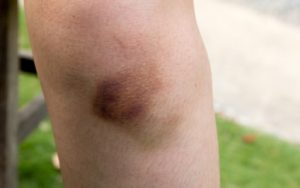
- Muscle bruises and contusions;
- Fractures to the ribs, clavicle (collar bone), humerus (upper arm), fingers, tibia/fibula (lower leg), and ankle;
- Arm and shoulder injuries, including wrist sprains, rotator cuff tears, and separated shoulder;
- Knee injuries, including Anterior Cruciate Ligament (ACL) sprain and Meniscus tear;
- Tailbone or coccyx injuries from falling onto your backside; and
- Ankle sprain.

Injury Prevention Strategies
Here are some basic safety rules that you can use to lower the risk of injuries during roller derby.
- Take time to warm-up properly prior to training and especially competition.
- Schedule a cool-down period and perform after skating stretches.
- Incorporate cardiovascular training for good physical conditioning and to prevent fatigue
- Add a thorough strength training program and practice balance, agility, and proprioception drills to improve knee and ankle stability.
- Include neuromuscular training for core stability and improved postural control.
- Increasing flexibility in the muscles and joints will reduce the stress on these areas while skating.
- Ensure you have had sufficient training and instructions in proper skating technique.
- Always use the best safety equipment that you can. Elbow and knee pads, wrist braces, helmets, mouth guards, and well fitting skates are vital to preventing sprains, strains, and broken bones out on the track.
- Make sure that your skates fit well and are in good condition, especially the wheels. All padding needs to be checked regularly for wear, and always make sure that your helmet fits securely at all times.
The 3 Best Stretches for Roller Derby
Roller derby stretches are one of the most under-utilized techniques for improving athletic performance, preventing sports injury and properly rehabilitating sprain and strain injury. Don’t make the mistake of thinking that something as simple as stretching won’t be effective.
As with any sport or activity there are rules and guidelines to ensure that they are safe. Stretching is no exception. Stretching can be harmful and cause injury if done incorrectly. It is vitally important that the following stretching guidelines be adhered to, both for safety and for maximizing the benefits of the stretches below.
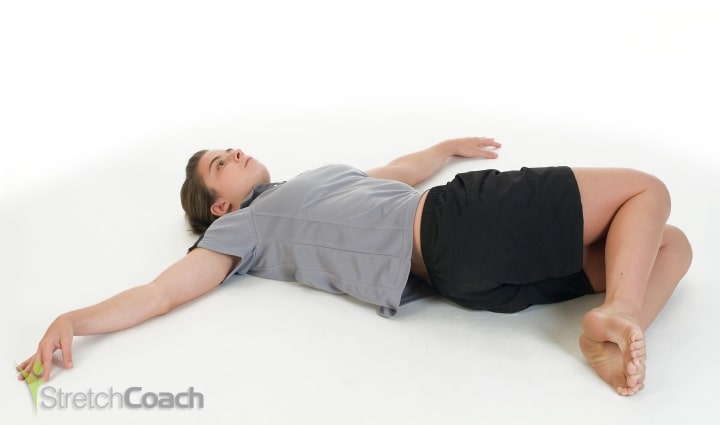
Below are 3 of the best stretches for roller derby; obviously there are a lot more, but these are a great place to start. Please make special note of the instructions with each stretch, and if you currently have any chronic or recurring muscle or joint pain please take extra care when performing the stretches below, or consult with your physician or physical therapist before performing any of the following stretches.
Instructions: Slowly move into the stretch position until you feel a tension of about 7 out of 10. If you feel pain or discomfort you’ve pushed the stretch too far; back out of the stretch immediately. Hold the stretch position for 20 to 30 seconds while relaxing and breathing deeply. Come out of the stretch carefully and perform the stretch on the opposite side if necessary. Repeat 2 or 3 times.


Research and References
- Walker, B. (2011). The Anatomy of Stretching, 2nd Edition (ISBN: 978-1583943717)
- Wikipedia contributors. (2019, April 16). Roller derby, In Wikipedia, The Free Encyclopedia.
- Markey, S. Hutchison, R. (2017). Epidemiology of Women’s Flat Track Roller Derby Injuries in Kansas City. Missouri Medicine, 114(1), 66.
- Cathorall, M. Peachey, A. (2018). Incidence and predictors of roller derby injuries among female roller derby athletes. International Journal of Injury Control and Safety Promotion, 25(4), 387-392.
- Kokkonen, J. Nelson, A. Eldredge, C. Winchester, J. (2007) Chronic Static Stretching Improves Exercise Performance. Medicine & Science in Sports & Exercise, 39(10), 1825-1831.
- Shellock, F, Prentice, W. (1985) Warming-up and stretching for improved physical performance and prevention of sports-related injuries. Sports Medicine, 2(4):267-78.
- Fradkin, A. Zazryn, T. Smoliga, J. (2010) Effects of warming-up on physical performance: a systematic review with meta-analysis. Journal of Strength and Conditioning Research, 24(1):140-8.
 About the Author: Brad Walker is often referred to as the "Stretch Coach" and has even been called the Stretching Guru. Magazines such as Runners World, Bicycling, Triathlete, Swimming & Fitness, and Triathlon Sports have all featured his work. Amazon (author page) has listed his books on five Best-Seller lists. Google cites over 100,000 references to him and his work on the internet. And satisfied customers from 122 countries have sent 1,000's of verified customer reviews. If you want to know about stretching, flexibility or sports injury management, Brad Walker is the go-to-guy.
Disclaimer: The health and fitness information presented on this website is intended as an educational resource and is not intended as a substitute for proper medical advice. Please consult your physician or physical therapist before performing any of the exercises described on this website, particularly if you are pregnant, elderly or have any chronic or recurring muscle or joint pain.