The 3 Best Stretches for Mountain Biking
Improve your mountain biking and minimize injuries with 3 of the best mountain biking stretches.
by Brad Walker | Updated October 14, 2024
Mountain biking (MTB) competitions began in the Netherlands and Belgium with races covering roads, worn paths, and any paths with rough terrain.
Participants had to ride distances in laps ranging from 1.5 to 2 miles (2.5 to 3.5 kms) or more on areas at least 10 feet (3m) wide to encourage the racers to pass one another. There was little need to stop and carry the bikes over obstacles.
Mountain biking includes many variants such as cross country, trail riding, all mountain, downhill, free ride, urban riding, dirt jumping, and trials during multiple terrains.

Muscles used in Mountain Biking
Mountain biking over irregular terrain, ascents, descents, and varying altitudes uses muscle groups from all over the body. The major muscles involved in mountain biking include:
- The main muscle groups that are constantly worked in mountain biking are the quadriceps and the gluteal muscles. The quadriceps are located on the front of the thighs, while the glutes are the muscles that make up the buttocks.
- Opposite of the quadriceps, on the back of the thighs, are the hamstrings. The hamstrings get an intense workout on the up-stroke of the pedal and when you stand up and pump the pedals during terrain ascents.
- The calves on the back of the lower legs get worked when you are seated on the bike and pedaling. The more intense workout occurs when standing up on the pedals; the steeper the grade, the more intense the workout.
- The core muscles that make up the lower abdominals, the upper abdominals, the obliques, and the lower back are always being worked while the legs are in motion.
- The arms and shoulders are used to support the upper body when leaning forward on the bike, and include the deltoids, biceps, and triceps, and the muscles of the hand, wrist, and forearm.
Most Common Mountain Biking Injuries
The most common injuries associated with mountain biking are abrasions, scrapes, cuts, and bruises, however some more serious injuries can include:
- Concussion, fractures (commonly the clavicle or collarbone and the wrist), and spinal injuries, which are usually the result of falls from the bike;
- Lower back pain;
- Forearm, wrist and hand injuries, including sprains and carpal tunnel syndrome;
- Iliotibial band syndrome (ITB);
- Knee injuries, including Patellofemoral pain syndrome and Patellar tendinitis;
- Achilles tendinitis; and
- Plantar fasciitis.

Injury Prevention Strategies
While accidents and injuries are to be expected in mountain biking, there are a few effective injury preventive strategies that will help you cycle your way safely through the roughest terrain.
- Warm-up: It is crucial to have a regular warm-up routine that prepares the body for the physically challenging demands of the activity. Warming up will gradually increase blood flow to the muscles in preparation for more intense activity.
- Cool down: Take time after your ride to cool down and stretch. This will help to prevent stiff muscles and delayed onset muscle soreness (DOMS) during the next 24 to 48 hours.
- Cardiovascular conditioning: Aerobic training will prevent fatigue and other overuse injuries.
- Strength training: Strength training leads to reduced potential for injury as it increases the strength of the muscles as well as that of the supporting joints and tendons.
- Agility training: Agility training is particularly helpful to a mountain biker as it works to improve the ability of the body to quickly adapt to a change in direction, motion, and velocity.
- Flexibility training: Stiff joints and muscles will ultimately lead to injured joints and muscles so improving the flexibility of the body will also work to decrease the likelihood of injury.
- Always Wear a Helmet: A good quality cycle helmet offers substantial protection and will minimize any head injury you may suffer.
- Wear Adequate Protective Gear: Eye glasses made from polycarbonate material offers invaluable protection against dust, wind, sand, insects, and stray branches. Elbow and knee pads help prevent traumatic injuries in the event of a fall. Cycling gloves significantly reduce superficial hand injuries in addition to providing insulation in cold weather.
- Stay Hydrated: Stay well hydrated by drinking water every 15 minutes even if you do not feel thirsty. Dehydration leads to fatigue, nausea, and disorientation, all factors that can result in falls and spills.
- Maintain your Bike: The importance of maintaining your bike cannot be emphasized enough. A mountain bike needs to be in impeccable condition if it is to carry you safely along often treacherous trails.
- Bike Set-up: Proper positioning on the bike is essential for comfort and to ensure proficient and biomechanically correct pedaling. Ensure that your bike is the correct size and your saddle is set correctly.
- Ride in a group: While mountain biking, it is important that you ride in a group, if possible, for reasons of general safety and so that assistance is readily and instantly available if you do get injured.
The 3 Best Stretches for Mountain Biking
Mountain biking stretches are one of the most under-utilized techniques for improving athletic performance, preventing sports injury and properly rehabilitating sprain and strain injury. Don’t make the mistake of thinking that something as simple as stretching won’t be effective.
As with any sport or activity there are rules and guidelines to ensure that they are safe. Stretching is no exception. Stretching can be harmful and cause injury if done incorrectly. It is vitally important that the following stretching guidelines be adhered to, both for safety and for maximizing the benefits of the stretches below.
Below are 3 of the best stretches for mountain biking; obviously there are a lot more, but these are a great place to start. Please make special note of the instructions with each stretch, and if you currently have any chronic or recurring muscle or joint pain please take extra care when performing the stretches below, or consult with your physician or physical therapist before performing any of the following stretches.
Instructions: Slowly move into the stretch position until you feel a tension of about 7 out of 10. If you feel pain or discomfort you’ve pushed the stretch too far; back out of the stretch immediately. Hold the stretch position for 20 to 30 seconds while relaxing and breathing deeply. Come out of the stretch carefully and perform the stretch on the opposite side if necessary. Repeat 2 or 3 times.


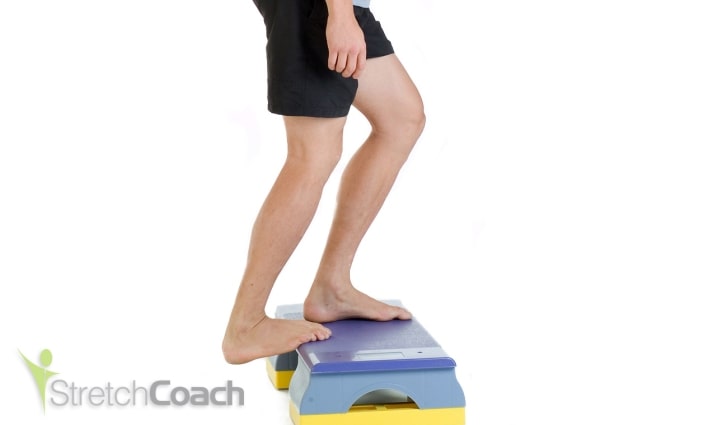
Kneeling Upper Hip & Quad Stretch: Kneel on one foot and the other knee. If needed, hold on to something to keep your balance and then push your hips forward.
Research and References
- Walker, B. (2011). The Anatomy of Stretching, 2nd Edition (ISBN: 978-1583943717)
- Wikipedia contributors. (2019, May 1). Mountain biking, In Wikipedia, The Free Encyclopedia.
- Roberts, D. Ouellet, J. Sutherland, F. Kirkpatrick, A. Lall, R. Ball, C. (2013). Severe street and mountain bicycling injuries in adults: a comparison of the incidence, risk factors and injury patterns over 14 years. Canadian Journal of Surgery, 56(3): E32–E38.
- Carmont, M. (2008). Mountain biking injuries: a review. British Medical Bulletin, 85(1) 101–112.
- Kronisch, R. Pfeiffer, R. (2002). Mountain biking injuries: an update. Sports Medicine, 32(8):523-37.
- Aleman, K. Meyers, M. (2010). Mountain biking injuries in children and adolescents. Sports Medicine, 40(1), 77-90.
- Bush, K. Meredith, S. Demsey, D. (2013). Acute hand and wrist injuries sustained during recreational mountain biking: a prospective study. Hand, 8(4), 397-400.
- Chow, T. Bracker, M. Patrick, K. (1993). Acute injuries from mountain biking. Western Journal of Medicine, 159(2), 145.
- Kokkonen, J. Nelson, A. Eldredge, C. Winchester, J. (2007) Chronic Static Stretching Improves Exercise Performance. Medicine & Science in Sports & Exercise, 39(10), 1825-1831.
- Shellock, F, Prentice, W. (1985) Warming-up and stretching for improved physical performance and prevention of sports-related injuries. Sports Medicine, 2(4):267-78.
- Fradkin, A. Zazryn, T. Smoliga, J. (2010) Effects of warming-up on physical performance: a systematic review with meta-analysis. Journal of Strength and Conditioning Research, 24(1):140-8.
 About the Author: Brad Walker is often referred to as the "Stretch Coach" and has even been called the Stretching Guru. Magazines such as Runners World, Bicycling, Triathlete, Swimming & Fitness, and Triathlon Sports have all featured his work. Amazon (author page) has listed his books on five Best-Seller lists. Google cites over 100,000 references to him and his work on the internet. And satisfied customers from 122 countries have sent 1,000's of verified customer reviews. If you want to know about stretching, flexibility or sports injury management, Brad Walker is the go-to-guy.
Disclaimer: The health and fitness information presented on this website is intended as an educational resource and is not intended as a substitute for proper medical advice. Please consult your physician or physical therapist before performing any of the exercises described on this website, particularly if you are pregnant, elderly or have any chronic or recurring muscle or joint pain.