
The 3 Best Stretches for Motocross
Improve your motocross and minimize injuries with 3 of the best motocross stretches.
by Brad Walker | Updated October 14, 2024
Motocross evolved from British scrambling, which began in 1924 in Camberley, Surrey. The sport gained traction in the 1930s, and by the 1950s, aerodynamic sport bikes emerged. In 1966, Motocross made its U.S. debut in Simi Valley, California. The 1960s saw Japanese manufacturers enter the scene, with Suzuki leading the charge in the 1970s and sponsoring early stadium events.
Today, Motocross features subdivisions like Supercross, Arenacross, Freestyle, Supermoto, and Vintage, showcasing a range of thrilling competitions.

Muscles used in Motocross
According to most riders on the motocross circuit, the following muscle groups are the most important to concentrate on:
- The Core Muscles: the rectus abdominus, the obliques, hip flexors, and spinal erectors are responsible for maintaining a good riding posture and preventing lower back injury. They act as a base of support for the rest of the body while riding.
- The Muscles of the Arms and Shoulders: the deltoids, biceps and triceps, as well as those in the forearm, wrist and hand are important for maintaining control of the bike during stunts and over rough terrain, as well as while performing emergency maneuvers during competitions.
Most Common Motocross Injuries
Motocross is arguably one of the most dangerous sports ever: high speeds, rough terrain, and the uncertainty of what the other riders may be doing.
The more common injuries in this sport are thankfully minor. Motocross riders think nothing of cuts, scrapes, and bruises, or ankle or wrist sprains; however, there are potentially serious injuries to be aware of and some the most common include:
- Concussion;
- Spinal cord injuries;
- Broken or sprained wrist;
- Rotator cuff tear;
- Shoulder dislocation and subluxation;
- Broken clavicle (collarbone), usually the result of landing on the shoulder;
- Knee injuries, including Anterior Cruciate Ligament (ACL) sprain and Meniscus tear; and
- Broken or sprained ankle.

Injury Prevention Strategies
First and foremost, donning the safety gear (including proper clothing, helmet, goggles, boots, and protective padding) is the most important step a rider should take to keep severe injuries at bay. Other injury prevention strategies include:
- Perform a thorough warm-up routine before riding. Warm-ups “awaken” the muscles preparing them for the oncoming stress of excessive and rigorous muscle movements. It is very important to include dynamic stretches in your warm-up routine. Stretching out the muscles of the back, shoulders, wrists and knees prior to competing is crucial to prevention of sprains and strains.
- Allow time for an adequate cool-down period and perform after training/competition stretching.
- Utilize proper strength training during the off-season, especially strengthening those muscles that take the most punishment during a race.
- Cardiovascular training is important to prevent muscles fatigue and allowing breakdown of proper form.
- Practice balance, agility, and proprioception drills to improve knee and ankle stability.
- Increasing flexibility in the muscles and joints will reduce the stress on these areas during motocross riding.
- Pushing the body beyond its limit for too long will only lead to more and more injuries. Incorporate regular recovery, rest, and relaxation periods into your training and competition.
- Learn to fall properly; the majority of injuries that occur in motocross happen when the rider falls off the bike. Tumbling and gymnastics classes will teach you how to be more flexible and relaxed while falling.
The 3 Best Stretches for Motocross
Motocross stretches are one of the most under-utilized techniques for improving athletic performance, preventing sports injury and properly rehabilitating sprain and strain injury. Don’t make the mistake of thinking that something as simple as stretching won’t be effective.
As with any sport or activity there are rules and guidelines to ensure that they are safe. Stretching is no exception. Stretching can be harmful and cause injury if done incorrectly. It is vitally important that the following stretching guidelines be adhered to, both for safety and for maximizing the benefits of the stretches below.
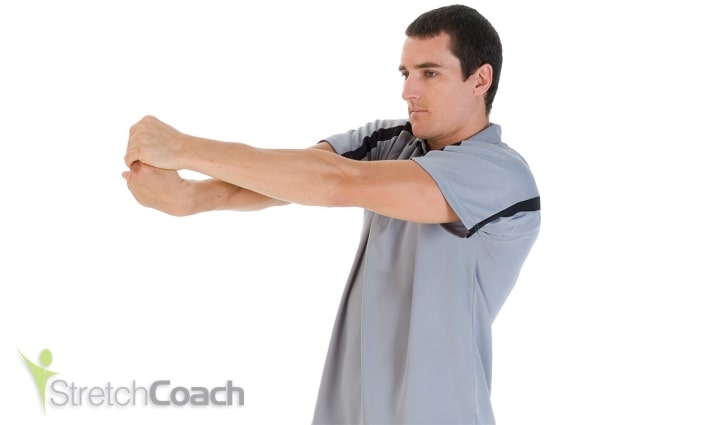
Below are 3 of the best stretches for motocross; obviously there are a lot more, but these are a great place to start. Please make special note of the instructions with each stretch, and if you currently have any chronic or recurring muscle or joint pain please take extra care when performing the stretches below, or consult with your physician or physical therapist before performing any of the following stretches.
Instructions: Slowly move into the stretch position until you feel a tension of about 7 out of 10. If you feel pain or discomfort you’ve pushed the stretch too far; back out of the stretch immediately. Hold the stretch position for 20 to 30 seconds while relaxing and breathing deeply. Come out of the stretch carefully and perform the stretch on the opposite side if necessary. Repeat 2 or 3 times.


Research and References
- Walker, B. (2011). The Anatomy of Stretching, 2nd Edition (ISBN: 978-1583943717)
- Wikipedia contributors. (2019, April 23). Motocross, In Wikipedia, The Free Encyclopedia.
- Gobbi, A. (2015). Motocross Injuries: Incidence, Management, and Prevention. Sports Injuries: Prevention, Diagnosis, Treatment and Rehabilitation, 1-15.
- Singh, R. Theobald, P. Hamad, A. Hay, S. (2015). Motocross biking for competition and for recreation: a prospective analysis of 423 injured riders. BMJ Open Sport & Exercise Medicine, 1(1), e000019.
- Gobbi, A. Tuy, B. Panuncialman, I. (2004). The incidence of motocross injuries: a 12-year investigation. Knee Surgery, Sports Traumatology Arthroscopy, 12(6):574-80.
- Kokkonen, J. Nelson, A. Eldredge, C. Winchester, J. (2007) Chronic Static Stretching Improves Exercise Performance. Medicine & Science in Sports & Exercise. Volume 39 – Issue 10 – pp 1825-1831.
- Shellock, F, Prentice, W. (1985) Warming-up and stretching for improved physical performance and prevention of sports-related injuries. Sports Medicine, 2(4):267-78.
- Fradkin, A. Zazryn, T. Smoliga, J. (2010) Effects of warming-up on physical performance: a systematic review with meta-analysis. Journal of Strength and Conditioning Research, 24(1):140-8.
 About the Author: Brad Walker is often referred to as the "Stretch Coach" and has even been called the Stretching Guru. Magazines such as Runners World, Bicycling, Triathlete, Swimming & Fitness, and Triathlon Sports have all featured his work. Amazon (author page) has listed his books on five Best-Seller lists. Google cites over 100,000 references to him and his work on the internet. And satisfied customers from 122 countries have sent 1,000's of verified customer reviews. If you want to know about stretching, flexibility or sports injury management, Brad Walker is the go-to-guy.
Disclaimer: The health and fitness information presented on this website is intended as an educational resource and is not intended as a substitute for proper medical advice. Please consult your physician or physical therapist before performing any of the exercises described on this website, particularly if you are pregnant, elderly or have any chronic or recurring muscle or joint pain.


