The 3 Best Stretches for Horse Riding
Improve your horse riding and minimize injuries with 3 of the best horse riding stretches.
by Brad Walker | Updated October 14, 2024
Horse riding dates back 6,000 years when horses were ridden for war, work and recreation. Since the 18th century horses have been used for sports such as Dressage, Polo, Rodeo, and racing.
There are different types of horse racing: Flat racing is well known and involves light weight jockey; Steeplechase is a distance race over varied terrain and obstacle such as fences, ditches and hedges.
In the 1900’s Equestrian events made their way in to the summer Olympics. The competition included Dressing, Show jumping, and Eventing, which are very popular.

Muscles used in Horse Riding
Horse riding actively engages several of the body’s major muscle groups with significant background work from the joints and tendons that they are attached to.
- The hip flexors are a group of muscles that help to provide free range of motion allowing the body to bend in to the hips, and the hips to be pulled in towards the torso. The hips work in conjunction with the rectus abdominis as well as the muscles in the lower back to keep the torso properly aligned, keeping the rider firmly positioned and anchored in the saddle. This also helps the horse maintain balance, which can prevent serious accidents.
- The four major muscles in the thighs are also known as the quadriceps (rectus femoris, vastus lateralis, vastus medialis, vastus intermedius). The other muscles in this region that are engaged while riding are the groin muscles (sartorius, gracilis, adductors, and pectineus), making the thigh the area with the highest concentration of active muscles while riding. This group serves to not only grip the saddle, but also to flex and extend the leg allowing the rider to rise up and down as the horse is trotting as well as to easily come up out of the saddle during show jumping. There are five adductor muscles in total that run from the pelvis to the thigh and down to the knee.
- The gastrocnemius and the soleus are more commonly known as the calf muscles. Although they may appear to hang in a state of rest at the sides of the animal, these muscles are also engaged while riding as the calves are used to provide directions that prompt the horse to turn or speed up simply by applying pressure. These are also flexed while the rider is up on their toes in the stirrups.
A good strengthening and conditioning program for these muscles will help ensure success on the horse. Weaknesses or imbalances in any of these muscles can lead to injuries for the rider. Special attention must be paid to stretching the muscles after use to ensure flexibility in commonly over-used muscles.
Most Common Horse Riding Injuries
As with all sports, horse riding can cause pain and trauma to the body if the rider doesn’t take the necessary precautions to minimize the likelihood of injury. The joints of the hips, knees, and ankles are particularly vulnerable due to the repetitive forceful pressure placed on them. A list of common injuries experienced by horse riders include:
- Groin strain;
- ACL injury;
- Meniscus tear;
- Achilles tendinitis;
- Lower back pain; and
- Muscle strains.
Horse riders who experience a fall from the horse may also be subject to:
- Fractures;
- Concussions;
- Spinal cord injury; and
- Traumatic Brain Injury (TBI).

Injury Prevention Strategies
Since so many of the muscle groups are used in horseback riding, it’s important to prepare the body for the physical demands of the activity.
- Using high quality protective equipment, including a helmet and vest, that has been maintained properly will help prevent many injuries.
- Exercising proper body mechanics and correct posture in the saddle can work to reduce the chances of over-use injury.
- Allowing the body regular rest intervals can also help the body in healing and recovery.
- Always warm-up properly prior to training and especially competition.
- Allow an adequate cool-down period and perform after training/competition stretching.
- Strength and conditioning exercises will keep the body in optimum form thereby minimizing the risk of injury. Strength training helps to build increased strength in the muscles and tendons and over time can improve the overall function of the body’s joints.
- Stiff muscles and joints are susceptible to injuries so stretching plays an important role in their prevention.
The 3 Best Stretches for Horse Riding
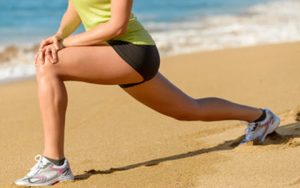
Horse riding stretches are one of the most under-utilized techniques for improving athletic performance, preventing sports injury and properly rehabilitating sprain and strain injury. Don’t make the mistake of thinking that something as simple as stretching won’t be effective.
As with any sport or activity there are rules and guidelines to ensure that they are safe. Stretching is no exception. Stretching can be harmful and cause injury if done incorrectly. It is vitally important that the following stretching guidelines be adhered to, both for safety and for maximizing the benefits of the stretches below.
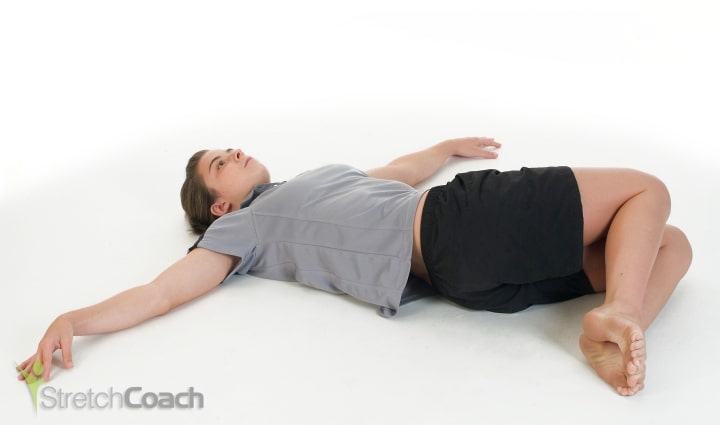
Below are 3 of the best stretches for horse riding; obviously there are a lot more, but these are a great place to start. Please make special note of the instructions with each stretch, and if you currently have any chronic or recurring muscle or joint pain please take extra care when performing the stretches below, or consult with your physician or physical therapist before performing any of the following stretches.
Instructions: Slowly move into the stretch position until you feel a tension of about 7 out of 10. If you feel pain or discomfort you’ve pushed the stretch too far; back out of the stretch immediately. Hold the stretch position for 20 to 30 seconds while relaxing and breathing deeply. Come out of the stretch carefully and perform the stretch on the opposite side if necessary. Repeat 2 or 3 times.


Research and References
- Walker, B. (2011). The Anatomy of Stretching, 2nd Edition (ISBN: 978-1583943717)
- Wikipedia contributors. (2019, April 22). Equestrianism, In Wikipedia, The Free Encyclopedia.
- Ball, C. Ball, J. Kirkpatrick, A. Mulloy, R. (2007). Equestrian injuries: incidence, injury patterns, and risk factors for 10 years of major traumatic injuries. The American Journal of Surgery, 193(5), 636-640.
- Carrillo, E. Varnagy, D. Bragg, S. Levy, J. Riordan, K. (2007). Traumatic injuries associated with horseback riding. Scandinavian Journal of Surgery, 96(1), 79-82.
- Mayberry, J. Pearson, T. Wiger, K., Diggs, B. Mullins, R. (2007). Equestrian injury prevention efforts need more attention to novice riders. Journal of Trauma and Acute Care Surgery, 62(3), 735-739.
- Pugh, T. Bolin, D. (2004). Overuse injuries in equestrian athletes. Current Sports Medicine Reports, 3(6), 297-303.
- Watt, G. Finch, C. (1996). Preventing equestrian injuries. Sports Medicine, 22(3), 187-197.
- Kokkonen, J. Nelson, A. Eldredge, C. Winchester, J. (2007) Chronic Static Stretching Improves Exercise Performance. Medicine & Science in Sports & Exercise, 39(10), 1825-1831.
- Shellock, F, Prentice, W. (1985) Warming-up and stretching for improved physical performance and prevention of sports-related injuries. Sports Medicine, 2(4):267-78.
- Fradkin, A. Zazryn, T. Smoliga, J. (2010) Effects of warming-up on physical performance: a systematic review with meta-analysis. Journal of Strength and Conditioning Research, 24(1):140-8.
 About the Author: Brad Walker is often referred to as the "Stretch Coach" and has even been called the Stretching Guru. Magazines such as Runners World, Bicycling, Triathlete, Swimming & Fitness, and Triathlon Sports have all featured his work. Amazon (author page) has listed his books on five Best-Seller lists. Google cites over 100,000 references to him and his work on the internet. And satisfied customers from 122 countries have sent 1,000's of verified customer reviews. If you want to know about stretching, flexibility or sports injury management, Brad Walker is the go-to-guy.
Disclaimer: The health and fitness information presented on this website is intended as an educational resource and is not intended as a substitute for proper medical advice. Please consult your physician or physical therapist before performing any of the exercises described on this website, particularly if you are pregnant, elderly or have any chronic or recurring muscle or joint pain.