
The 3 Best Stretches for Ballroom Dancing
Improve your ballroom dancing and minimize injuries with 3 of the best ballroom dancing stretches.
by Brad Walker | Updated October 14, 2024
Ballroom dancing refers to a series of dances performed with a partner. Competition style ballroom dancing involves: international dances like the Waltz, the Fox Trot, the Samba and the Paso Doble, or; mixing traditional ballroom dances with faster styles like the Lindy Hop, Merengue, West Coast Swing, and the Tango.
In a competition, participants earn points for their poise, posture, expressions, timing, and presentation as well as their foot and leg action.
Organized dancing originated in France with Basse Danse, Pavane, and Galliarde. The waltz began during the Victorian Era around 1812. The foxtrot was the first true American ballroom dance. The jazz inspired Charleston is a form of the jitterbug, while the Quickstep is a faster version of the foxtrot. The Cuban Mambo, the Cha-Cha, and the American Jive made their debuts on the dance scene around the 1940’s and changed the world of ballroom dancing forever.

Muscles used in Ballroom Dancing
Ballroom dancing offers a total cardiovascular exercise, working all of the major muscle groups in varying degrees of intensity, depending on the dance executed. Muscular strength and muscular endurance are essential in the upper body, especially the back and arms as well as the lower body, primarily in the core section as well as the legs and calves.
The major muscle groups that will get a workout with ballroom dancing include:
- The hip abductors, hip adductors (groin), quadriceps, calves, the hamstrings, and the gluteal muscles.
- The upper back muscles, especially the area around the shoulders and upper arms including the triceps and the girdle and deltoid muscles.
- The abdominal and obliques, collectively known as the “core,” which includes the abdominal wall muscles and the spinal erectors.
Most Common Ballroom Injuries
While ballroom dancing may not appear to be an activity even remotely connected to injury, it is important to be aware of the reality of injury. Common ballroom injuries include:
- Upper and lower back pain;
- Hip injuries, including tendinitis and iliotibial band (ITB) syndrome;
- Knee injuries, including anterior cruciate ligament (ACL) sprain, patellofemoral pain syndrome (Runner’s Knee), and meniscus tears;
- Stress fractures;
- Shin splints;
- Achilles tendinitis; and
- Ankle sprain.

Injury Prevention Strategies
Among the most common injuries in ballroom dancers are those caused by overuse. Repetitive movements done for extended periods of time place undue stress on the legs, hips, feet, backs, and shoulders of dancers. The good news is most of the injuries associated with ballroom dancing can be prevented.
- One of the best things you can do to prevent injuries during ballroom dancing is to warm-up before executing any moves out on the floor.
- Keep in mind that cooling down after each rehearsal or performance is just as important as the warm-up session.
- Strength training (especially core strength) and improved cardiovascular fitness will help to prevent fatigue and build resistance to injury.
- Practicing balance, agility, and proprioception drills to improve knee and ankle stability.
- Be sure to perform some very specific stretches to loosen all of the muscle groups that will be involved in your dance routine and pay particular attention to those areas that you know are prone to injury.
- During the dance, be aware of your moving postural alignment. Maintain proper posture to prevent back strain and make sure you are in the proper and balanced position before attempting lifts or dips.
- Use of ankle supports (braces, taping, strapping, etc.) can reduce the incidence of ankle sprains.
- While wrist braces or elbow and knee pads may not go with the rest of the outfit on the actual dance night, during practice sessions it helps to wear a brace or wrap on any weak muscle area to protect the tender areas, such as the back, knees, ankles, and wrists.
The 3 Best Stretches for Ballroom Dancing
Ballroom dancing stretches are one of the most under-utilized techniques for improving athletic performance, preventing sports injury and properly rehabilitating sprain and strain injury. Don’t make the mistake of thinking that something as simple as stretching won’t be effective.
As with any sport or activity there are rules and guidelines to ensure that they are safe. Stretching is no exception. Stretching can be harmful and cause injury if done incorrectly. It is vitally important that the following stretching guidelines be adhered to, both for safety and for maximizing the benefits of the stretches below.
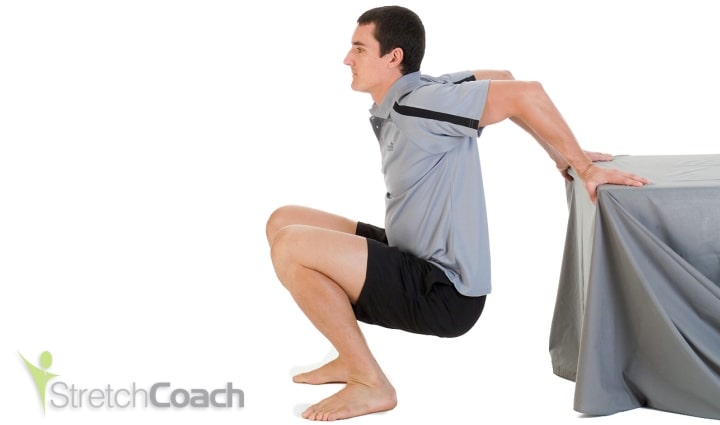
Below are 3 of the best stretches for ballroom dancing; obviously there are a lot more, but these are a great place to start. Please make special note of the instructions with each stretch, and if you currently have any chronic or recurring muscle or joint pain please take extra care when performing the stretches below, or consult with your physician or physical therapist before performing any of the following stretches.
Instructions: Slowly move into the stretch position until you feel a tension of about 7 out of 10. If you feel pain or discomfort you’ve pushed the stretch too far; back out of the stretch immediately. Hold the stretch position for 20 to 30 seconds while relaxing and breathing deeply. Come out of the stretch carefully and perform the stretch on the opposite side if necessary. Repeat 2 or 3 times.


Research and References
- Walker, B. (2011). The Anatomy of Stretching, 2nd Edition (ISBN: 978-1583943717)
- Wikipedia contributors. (2019, April 16). Ballroom dance, In Wikipedia, The Free Encyclopedia.
- Rietveld, A. (2013). Dancers’ and musicians’ injuries. Clinical Rheumatology, 32(4), 425-434.
- Roberts, K. Nelson, N. McKenzie, L. (2013). Dance-Related Injuries in Children and Adolescents Treated in US Emergency Departments in 1991− 2007. Journal of Physical Activity and Health, 10(2), 143-150.
- Bird, H. (2016). Styles of dance and their demands on the body. Performing Arts Medicine in Clinical Practice, pp. 21-37.
- Russell, J. (2013). Preventing dance injuries: current perspectives. Open Access Journal of Sports Medicine, 4, 199.
- Kokkonen, J. Nelson, A. Eldredge, C. Winchester, J. (2007) Chronic Static Stretching Improves Exercise Performance. Medicine & Science in Sports & Exercise. Volume 39 – Issue 10 – pp 1825-1831.
- Shellock, F, Prentice, W. (1985) Warming-up and stretching for improved physical performance and prevention of sports-related injuries. Sports Medicine, 2(4):267-78.
- Fradkin, A. Zazryn, T. Smoliga, J. (2010) Effects of warming-up on physical performance: a systematic review with meta-analysis. Journal of Strength and Conditioning Research, 24(1):140-8.
 About the Author: Brad Walker is often referred to as the "Stretch Coach" and has even been called the Stretching Guru. Magazines such as Runners World, Bicycling, Triathlete, Swimming & Fitness, and Triathlon Sports have all featured his work. Amazon (author page) has listed his books on five Best-Seller lists. Google cites over 100,000 references to him and his work on the internet. And satisfied customers from 122 countries have sent 1,000's of verified customer reviews. If you want to know about stretching, flexibility or sports injury management, Brad Walker is the go-to-guy.
Disclaimer: The health and fitness information presented on this website is intended as an educational resource and is not intended as a substitute for proper medical advice. Please consult your physician or physical therapist before performing any of the exercises described on this website, particularly if you are pregnant, elderly or have any chronic or recurring muscle or joint pain.


