6 Best Plantar Fasciitis Stretches and Exercises
Stretches for plantar fasciitis to improve your ankle and plantar fascia flexibility and relieve tight foot arches.
by Brad Walker | Updated May 25, 2020
- Kamonseki, D. Gonçalves, G. Yi, L. Lombardi , I. (2016) Effect of Stretching With and Without Muscle Strengthening Exercises for the Foot and Hip in Patients With Plantar Fasciitis: A Randomized Controlled Single-Blind Clinical Trial. Manual Therapy, 23:76-82.
- Celik, D. Kuş, G. Önder Sırma, S. (2016) Joint Mobilization and Stretching Exercise vs Steroid Injection in the Treatment of Plantar Fasciitis: A Randomized Controlled Study. Foot & Ankle International, 37(2):150-6.
Sports that Benefit from Plantar Fasciitis Stretches
All running sports like Soccer, Gridiron, Football and Rugby benefit from regular plantar fascia stretching. Running, Sprinting, Track, Cross Country, Walking, Race Walking and any sport that involves jumping or explosive movement.
Other sports that benefit from the plantar fasciitis stretches below include: Hiking, Backpacking, Mountaineering and Orienteering. Basketball and Netball; Ice Hockey and Field Hockey; Ice Skating, Roller Skating and Inline Skating. Snow Skiing, Water Skiing and Surfing.

Lower Leg and Foot Muscles being Stretched
While performing the plantar fasciitis stretches below there are a number of muscles within the lower leg and arch of the foot that are stretched. Below is a comprehensive list of the anatomical muscle names involved in the following plantar fasciitis stretches.
- Tibialis posterior (Upper calf);
- Soleus (Lower calf and Achilles);
- Flexor hallucis longus, Flexor digitorum longus, Peroneus longus and brevis (Lower calf);
- Flexor digitorum brevis, Abductor hallucis, Abductor digiti minimi, Quadratus plantae (Arch of the foot); and
- Flexor hallucis brevis, Adductor hallucis, Flexor digiti minimi brevis (Arch of the foot);
Plantar Fasciitis Stretching Safety Guidelines
As with any activity there are rules and guidelines to ensure that they are safe. Stretching is no exception. Stretching can be harmful and cause injury if done incorrectly. It is important that the following guidelines be adhered to, both for safety and for maximizing the potential benefits of stretching.
- Breathe. Don’t hold your breath. Holding your breath can cause tension in your body and muscles. Breathe deeply and relax while performing the stretches below.
- Never force a stretch beyond the point of mild tension. Stretching tight muscles, and especially the muscles in the arch of the foot, can be uncomfortable, but you should never feel pain. Move into the stretch until you can feel mild tension and if you do feel any pain, stop immediately.
- Be consistent. Stretching for a few minutes each day will gradually build flexibility and range of motion. This is far preferable to stretching only once a week for a longer time.
- Wear loose comfortable clothing. It’s obviously very difficult to stretch if your clothes are tight and restrict movement.
Sample Plantar Fasciitis Stretches
Slowly move into the stretch position until you feel a tension of about 7 out of 10. If you feel pain or discomfort you’ve pushed the stretch too far; back out of the stretch immediately. Hold the stretch position for 20 to 30 seconds while relaxing and breathing deeply. Come out of the stretch carefully and perform the stretch on the opposite side. Repeat 2 or 3 times.

Kneeling heel-down Lower Calf and Achilles Stretch: Kneel on one foot and place your body weight over your knee. Keep your heel on the ground and lean forward. In the photo to the left, the athlete is stretching the arch of her left foot. Hold this stretch for about 20 to 30 seconds and repeat at least 2 to 3 times on each side.

Sample Plantar Fasciitis Stretching Videos and Exercises
Below you’ll find a few good stretches and exercises for your lower calf and plantar fascia. But don’t rely on just a few stretches; it’s important to do a range of stretches for the Achilles, upper and lower calf, foot, toes and arch. Please be careful, if you haven’t stretched your lower leg, foot and arch muscles, some of these stretches will put a lot of stress on this area. Warm-up first, then proceed in a gradual and gently way.
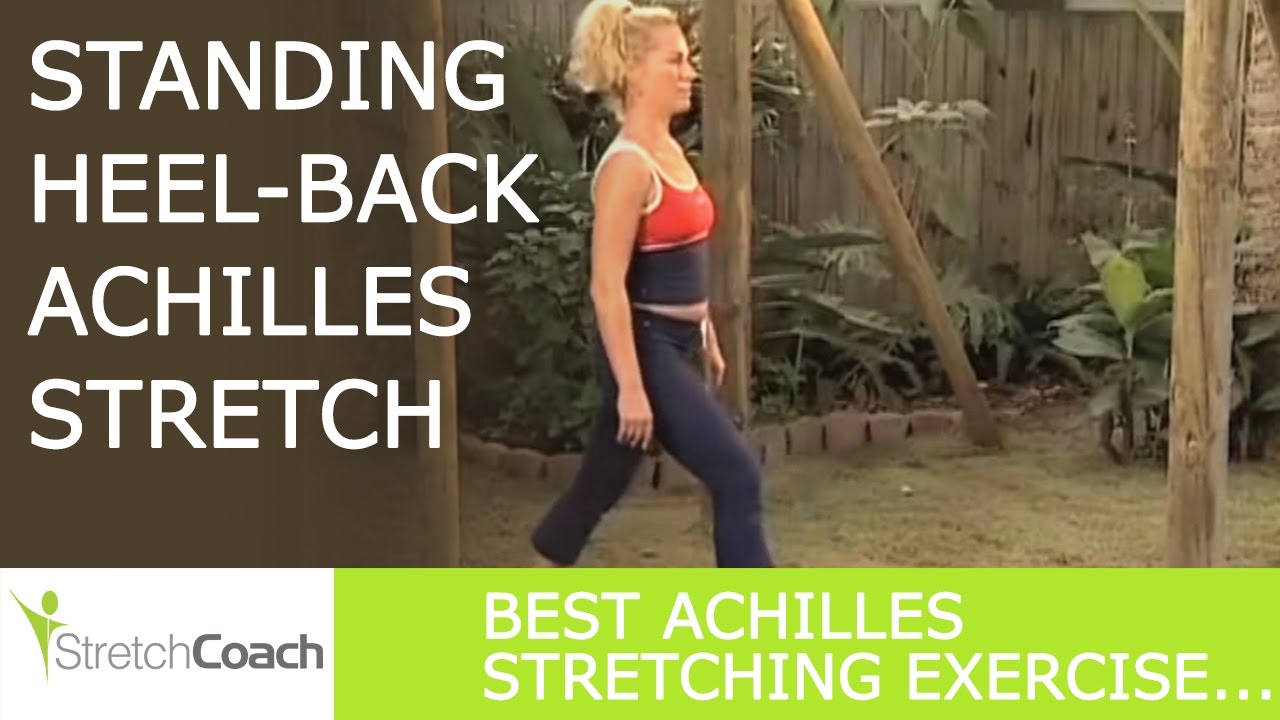
Standing Heel-Back Achilles Stretch (1:19) Stand upright and take one big step backwards. Bend your back leg and push your heel towards the ground. Make sure the toes of your back leg are facing forward. Letting your toes point to one side will cause this stretch to put uneven tension on the calf muscles. Over an extended period of time, this could lead to a muscle imbalance. Regulate the intensity of this stretch by lowering your body.

Standing Calf Stretch (1:20) Stand with one knee bent and the other leg straight out in front. Point your toes towards your body and lean forward. Keep your back straight and rest your hands on your bent knee. Make sure your toes are pointing upward. Letting your toes point to one side will cause this stretch to put uneven tension on the calf muscles. Over an extended period of time, this could lead to a muscle imbalance.


How to use a tennis ball to stretch your plantar fascia (1:59)
Research and References
- Celik, D. Kuş, G. Önder Sırma, S. (2016) Joint Mobilization and Stretching Exercise vs Steroid Injection in the Treatment of Plantar Fasciitis: A Randomized Controlled Study. Foot & Ankle International, 37(2):150-6.
- Digiovanni, B. Nawoczenski, D. Malay, D. Graci, P. Williams, T. Wilding, G. Baumhauer, J. (2006). Plantar fascia-specific stretching exercise improves outcomes in patients with chronic plantar fasciitis: a prospective clinical trial with two-year follow-up. Journal of Bone and Joint Surgery, 88(8), 1775-1781.
- Drake, M. Bittenbender, C. Boyles, R. (2007). The Short-Term Effects of Treating Plantar Fasciitis With a Temporary Custom Foot Orthosis and Stretching. Journal of Orthopaedic & Sports Physical Therapy, 41(4) 221–231.
- Engkananuwat, P. Kanlayanaphotporn, R. Purepong, N. (2017). Effectiveness of the Simultaneous Stretching of the Achilles Tendon and Plantar Fascia in Individuals With Plantar Fasciitis. Foot & Ankle International, 39(1):75-82.
- Kamonseki, D. Gonçalves, G. Yi, L. Lombardi , I. (2016) Effect of Stretching With and Without Muscle Strengthening Exercises for the Foot and Hip in Patients With Plantar Fasciitis: A Randomized Controlled Single-Blind Clinical Trial. Manual Therapy, 23:76-82.
- Mohamed, H. (2015). Effectiveness of Achilles tendon stretching for the treatment of chronic plantar fasciitis. The Egyptian Orthopaedic Journal, 50(4):215-222.
- Renan-Ordine, R. Alburquerque-SendÍn, F. De Souza, D. Cleland, J. Fernández-de-las-Peñas, C. (2011). Effectiveness of Myofascial Trigger Point Manual Therapy Combined With a Self-Stretching Protocol for the Management of Plantar Heel Pain: A Randomized Controlled Trial. Journal of Orthopaedic & Sports Physical Therapy, 41(2) 43–50.
- Speller, J. (December 22, 2017). Muscles of the Foot. Retrieved June 4, 2019, from https://teachmeanatomy.info/lower-limb/muscles/foot/.
- Sweeting, D. Parish, B. Hooper, L. Chester, R. (2011). The effectiveness of manual stretching in the treatment of plantar heel pain: a systematic review. Journal of Foot and Ankle Research, 4(1), 19.
- Walker, B. (2011). The Anatomy of Stretching, 2nd Edition (ISBN: 978-1583943717)
- Wikipedia contributors. (2019, May 18). Plantar fasciitis, In Wikipedia, The Free Encyclopedia.
 About the Author: Brad Walker is often referred to as the "Stretch Coach" and has even been called the Stretching Guru. Magazines such as Runners World, Bicycling, Triathlete, Swimming & Fitness, and Triathlon Sports have all featured his work. Amazon (author page) has listed his books on five Best-Seller lists. Google cites over 100,000 references to him and his work on the internet. And satisfied customers from 122 countries have sent 1,000's of verified customer reviews. If you want to know about stretching, flexibility or sports injury management, Brad Walker is the go-to-guy.
Disclaimer: The health and fitness information presented on this website is intended as an educational resource and is not intended as a substitute for proper medical advice. Please consult your physician or physical therapist before performing any of the exercises described on this website, particularly if you are pregnant, elderly or have any chronic or recurring muscle or joint pain.