Patellar Tendinitis (Jumper’s Knee)
Patellar tendinitis causes, prevention and risk factors, plus rehabilitation exercises and stretches.
by Brad Walker | Updated June 29, 2025
Patellar Tendinitis, commonly known as Jumper’s knee, is an extremely painful and frustrating injury that puts a large strain on the front of the knee joint, just below the patella (kneecap).
Patellar tendinitis is common among running related sports. However, it doesn’t normally occur in an instant, like an ankle sprain or hamstring strain, but starts off as a dull ache, and progresses quickly to a sharp, debilitating knee pain.
Note: The term patellar tendinitis and patellar tendonitis are interchangeable and mean the same thing.

What is Patellar Tendinitis?
As with all cases of tendinitis, patellar tendinitis is simply the inflammation, degeneration, or rupture of the patellar ligament and the tissue that surround it, leading to pain and discomfort in the area just below the kneecap.
What causes Patellar Tendinitis?
Overuse is the major cause of patellar tendinitis. Activities that involve a lot of jumping and rapid change of direction are particularly stressful to the patellar ligament. Participants of basketball, volleyball, soccer, and other running related sports are particularly vulnerable to patellar tendinitis.
Patellar tendinitis can also be caused by a sudden, unexpected injury like a fall. Landing heavily on your knees can damage the patellar ligament, which can lead to patellar tendinitis.
Patellar Tendinitis Anatomy
The accompanying anatomical image displays both a front-on and side-on view of the muscles, bones, tendons, and ligaments that make up the knee joint.
The bones that make up the knee joint are the Femur, Tibia, Fibula, and Patella. While the major muscle that affects patellar tendinitis is the Quadriceps in the front of the thigh.
In the center of the bottom left picture is the patella, or kneecap. The structure that runs downward from the patella (kneecap) to the tibia (shinbone) is the patellar ligament.
On occasion you may hear of this structure being called the patellar tendon (as in the image), but for the purposes of anatomy and physiology this structure is a ligament, as it attaches the patella to the tibia. Ligaments attach bone to bone, while tendons attach muscle to bone.

Patellar Tendinitis Treatment
Patellar tendinitis is just like any other soft tissue injury and should be treated accordingly. This involves the application of R.I.C.E.R. (R) rest, (I) ice, (C) compression, (E) elevation and obtaining a (R) referral for appropriate medical treatment. It is critical that the R.I.C.E.R. regimen be implemented for at least the first 48 to 72 hours. Doing this will give you the best possible chance of a complete and full recovery. The following few points are of most importance.
- Rest and Immobilization: Once patellar tendinitis has been diagnosed, it is important that the affected area be rested immediately. Any further movement or stress will only aggravate the condition and prolong recovery. It is also important to keep the injured area as still as possible.
- Ice: By far the most important part. The application of ice will have the greatest effect on reducing swelling and pain. Apply ice as soon as possible after the injury has occurred.
- Anti-inflammatory Medication: The use of anti-inflammatory, NSAIDs (Non-steroidal anti-inflammatory drugs), and analgesic medication can also help to reduce pain and inflammation during the initial stages of treatment.
During the first 48 to 72 hours after an injury like patellar tendinitis, be sure to avoid any form of heat at the injury site. This includes heat lamps, heat creams, spas, Jacuzzi’s and saunas. Avoid all movement and massage of the injured area. Also, avoid excessive alcohol. All these things will increase the swelling and pain of your injury.
- The next phase of treatment (after the first 48 to 72 hours) involves a few physiotherapy techniques. The most common methods used to do this include ultrasound, heat and massage.
- Next, start to incorporate very gentle range of motion exercises for the muscle groups around the knee. The buttocks, hamstrings, quadriceps and groin are a good place to start.
- Once most of the pain has reduced, it is time to move onto the rehabilitation phase of your treatment. The main aim of this phase is to regain the strength, power, endurance and flexibility of the muscles and tendons around the knee.
Patellar Tendinitis Prevention
Although it is important to be able to treat patellar tendinitis, prevention should be your first priority. So, what are some of the things you can do to help prevent patellar tendinitis?
- Warm-Up properly: A good warm-up is essential in getting the body ready for any activity. A well-structured warm-up will prepare your heart, lungs, muscles, joints and your mind for strenuous activity.
- Avoid activities that cause pain: This is self-explanatory, but try to be aware of activities that cause pain or discomfort, and either avoid them or modify them.
- Rest and Recovery: Rest is especially important in helping the soft tissues of the body recover from strenuous activity. Be sure to allow adequate recovery time between workouts or training sessions.
- Balancing Exercises: Any activity that challenges your ability to balance, and keep your balance, will help what is called, proprioception: – your body’s ability to know where its limbs are at any given time.
- Footwear: Be aware of the importance of good footwear. A good pair of shoes will help to keep your knees stable, provide adequate cushioning, and support your knees and lower leg during the running or walking motion.
- Strapping: Strapping, taping, or knee braces can provide an added level of support and stability to weak or injured knees.
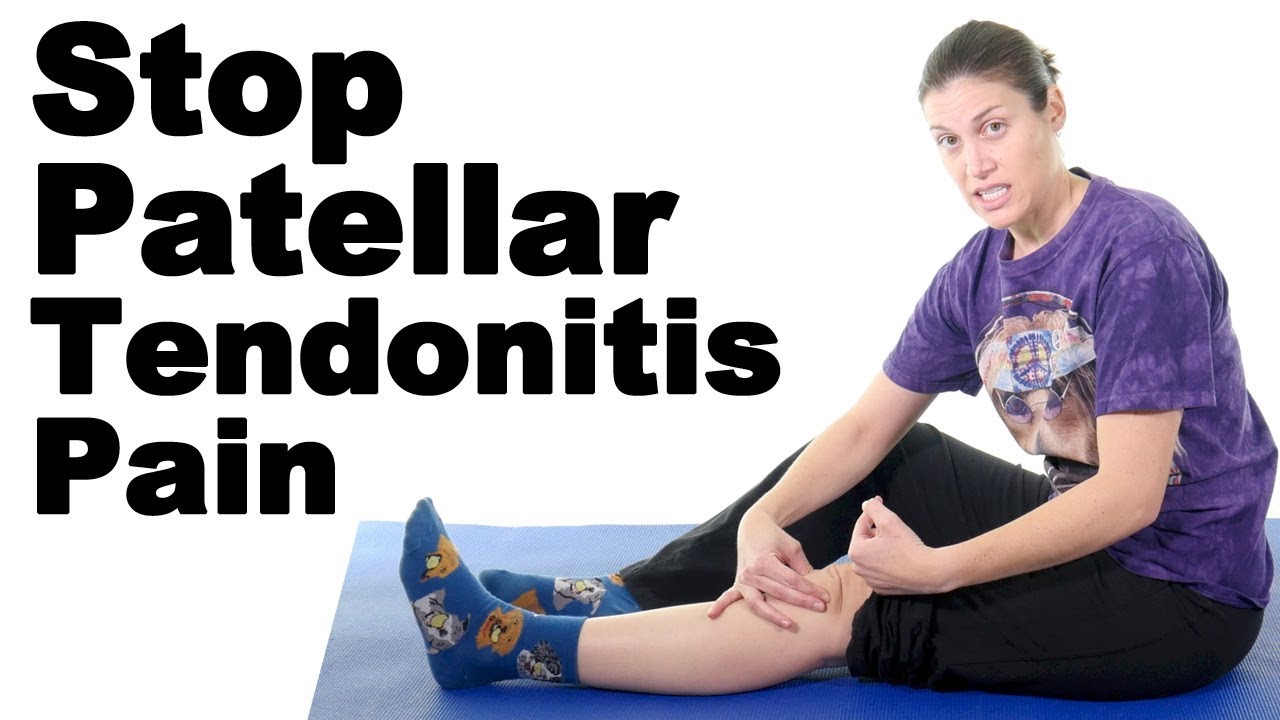
- Stretch and Strengthen: Instead of me trying to explain how to do strength and flexibility exercises, I simply found a few YouTube videos (below) that have clear visual examples and good descriptions of how to perform exercises and stretches for the muscles around your hips and knees.

Research and References
- Bahr, R. Maehlum, S. (2004) Clinical Guide to Sports Injuries, 1st Edition (ISBN: 978-0736041171)
- Martini, F. Tallitsch, R. Nath, J. (2009) Human Anatomy, 9th Edition (ISBN: 978-013432076X)
- Reinking, M. (2016). Current Concepts in the Treatment of Patellar Tendinopathy. International Journal of Sports Physical Therapy, 11(6): 854–866.
- Rudavsky, A. Cook, J. (2007). Physiotherapy management of patellar tendinopathy (jumper’s knee). Journal of Physiotherapy, 60(3): 122-129.
- Rutland, M. O’Connell, D. Brismée, JM. Sizer, P. Apte, G. O’Connell, J. (2010). Evidence–Supported Rehabilitation of Patellar Tendinopathy. North American Journal of Sports Physical Therapy, 5(3): 166–178.
- Tortora, G. Derrickson, B. (2009) Principles of Anatomy and Physiology, 14th Edition (ISBN: 978-1118866096)
- Walker, B. (2018). The Anatomy of Sports Injuries, 2nd Edition (ISBN: 978-1623172831)
- Wikipedia contributors. (2020, October 5). Patellar tendinitis, In Wikipedia, The Free Encyclopedia.
 About the Author: Brad Walker is often referred to as the "Stretch Coach" and has even been called the Stretching Guru. Magazines such as Runners World, Bicycling, Triathlete, Swimming & Fitness, and Triathlon Sports have all featured his work. Amazon (author page) has listed his books on five Best-Seller lists. Google cites over 100,000 references to him and his work on the internet. And satisfied customers from 122 countries have sent 1,000's of verified customer reviews. If you want to know about stretching, flexibility or sports injury management, Brad Walker is the go-to-guy.
Disclaimer: The health and fitness information presented on this website is intended as an educational resource and is not intended as a substitute for proper medical advice. Please consult your physician or physical therapist before performing any of the exercises described on this website, particularly if you are pregnant, elderly or have any chronic or recurring muscle or joint pain.