
Iliotibial Band Syndrome (ITBS)
Treat and prevent lateral knee pain caused by iliotibial band syndrome.
by Brad Walker | Updated April 13, 2025
Knee pain caused by iliotibial band syndrome is common among runners and cyclists. However, the knee pain doesn’t usually occur in an instant, like a hamstring strain or groin pull, but starts out as a dull ache, and progresses quickly to debilitating knee pain that can sideline the best athletes for weeks.

What Causes Iliotibial Band Syndrome?
There are two main causes of lateral knee pain associated with iliotibial band syndrome. The first is overload and the second is biomechanical errors.
Overload is common with sports that require a lot of repetitive motion, like running, cycling, or weight bearing activity. This is why ITBS is commonly called a runner’s injury. When the tensor fasciae latae muscle and iliotibial band become fatigued and overloaded, they lose their ability to stabilize the leg while in motion. This in-turn places stress on the knee joint, which results in pain and damage to the structures that make up the outside of the knee joint.
Overload can be caused by:
- Exercising on hard surfaces, like concrete.
- Exercising on uneven ground.
- Beginning an exercise program after a long lay-off period.
- Increasing exercise intensity or duration too quickly.
- Exercising in worn out or ill-fitting shoes.
- Excessive uphill or downhill running.
Biomechanical errors include:
- Leg length differences.
- Tight, stiff muscles in the leg.
- Muscle imbalances.
- Foot structure problems such as flat feet.
- Gait, or running style problems such as pronation and supination.
Iliotibial Band Syndrome Anatomy
For those who aren’t familiar with Iliotibial Band Syndrome, let’s start by having a look at the muscle responsible for the problem.
The iliotibial band is a thick tendon-like portion of another muscle called the tensor fasciae latae. This band passes down the outside of the thigh and inserts just below the knee.
The diagram shows the anterior (front) view of the thigh. If you look towards the top left of the diagram, you’ll see the tensor fasciae latae muscle. Follow the tendon of this muscle down and you’ll see that it runs all the way to the knee. This thick band of tendon is the iliotibial band (or iliotibial tract).
The main problem occurs when the tensor fasciae latae muscle and iliotibial band become tight. This causes the tendon to pull the knee joint out of alignment and rub against the outside of the knee, which results in inflammation and pain.

Treatment for Iliotibial Band Syndrome
Firstly, be sure to remove the cause of the problem. Whether it be an overload problem, or a biomechanical problem, make sure steps are taken to remove the cause.
The initial treatment for iliotibial band syndrome is the same as most other soft tissue injuries. This involves the application of R.I.C.E.R. (R) rest, (I) ice, (C) compression, (E) elevation and obtaining a (R) referral for appropriate medical treatment. It is critical that the R.I.C.E.R. regimen be implemented for at least the first 48 to 72 hours. Doing this will give you the best possible chance of a complete and full recovery. The following few points are of most importance.
- Rest and Immobilization: Once ITBS is diagnosed, it is important that the affected area be rested immediately. Any further movement or stress will only aggravate the condition and prolong recovery. It is also important to keep the injured area as still as possible.
- Ice: By far the most important part. The application of ice will have the greatest effect on reducing swelling and pain. Apply ice as soon as possible after the injury has occurred.
- Anti-inflammatory Medication: The use of anti-inflammatory, NSAIDs (Non-steroidal anti-inflammatory drugs), and analgesic medication can also help to reduce pain and inflammation during the initial stages of treatment.
During the first 48 to 72 hours after an injury like ITBS, be sure to avoid any form of heat at the injury site. This includes heat lamps, heat creams, spas, Jacuzzi’s, and saunas. Avoid all movement and massage of the injured area. Also, avoid excessive alcohol use. All these things will increase the swelling and pain of your injury.
- The next phase of treatment (after the first 48 to 72 hours) involves a few physiotherapy techniques. The most common methods used to do this include ultrasound, heat and massage.
- Next, start to incorporate very gentle range of motion exercises for the muscle groups around the knee. The buttocks, hamstrings, quadriceps and groin are a good place to start.
- Once most of the pain has reduced, it is time to move onto the rehabilitation phase of your treatment. The main aim of this phase is to regain the strength, power, endurance, and flexibility of the muscles and tendons around the knee.
Preventing Iliotibial Band Syndrome
Although the pain may be felt in the knee, the problem is caused by the muscles that support the knee. Namely the tensor fasciae latae and the large muscle at the rear of your upper leg. Other muscles in the lower back, hip, buttocks, and upper leg also affect the function of the knee, so it’s important to pay attention to all these muscles as well.
Here are some of the things you can do to help prevent iliotibial band syndrome.
- Warm-Up properly: A good warm-up is essential in getting the body ready for any activity. A well-structured warm-up will prepare your heart, lungs, muscles, joints and your mind for strenuous activity.
- Avoid activities that cause pain: This is self-explanatory, but try to be aware of activities that cause pain or discomfort, and either avoid them or modify them. If you are in too much pain to resume normal exercise, consider swimming, or aquatic therapy.
- Rest and Recovery: Rest is especially important in helping the soft tissues of the body recover from strenuous activity. Be sure to allow adequate recovery time between workouts or training sessions.
- Balancing Exercises: Any activity that challenges your ability to balance, and keep your balance, will help what is called, proprioception: – your body’s ability to know where its limbs are at any given time.
- Footwear: Be aware of the importance of good footwear. A good pair of shoes will help to keep your knees stable, provide adequate cushioning, and support your knees and lower leg during the running or walking motion.
- Strapping: Strapping, or taping can provide an added level of support and stability to weak or injured knees.
- Strengthening: Instead of me trying to explain how to do strength exercises, I simply found some great YouTube videos (below) that have clear visual examples and good descriptions of how to perform exercises for the muscles around your hips and knees.

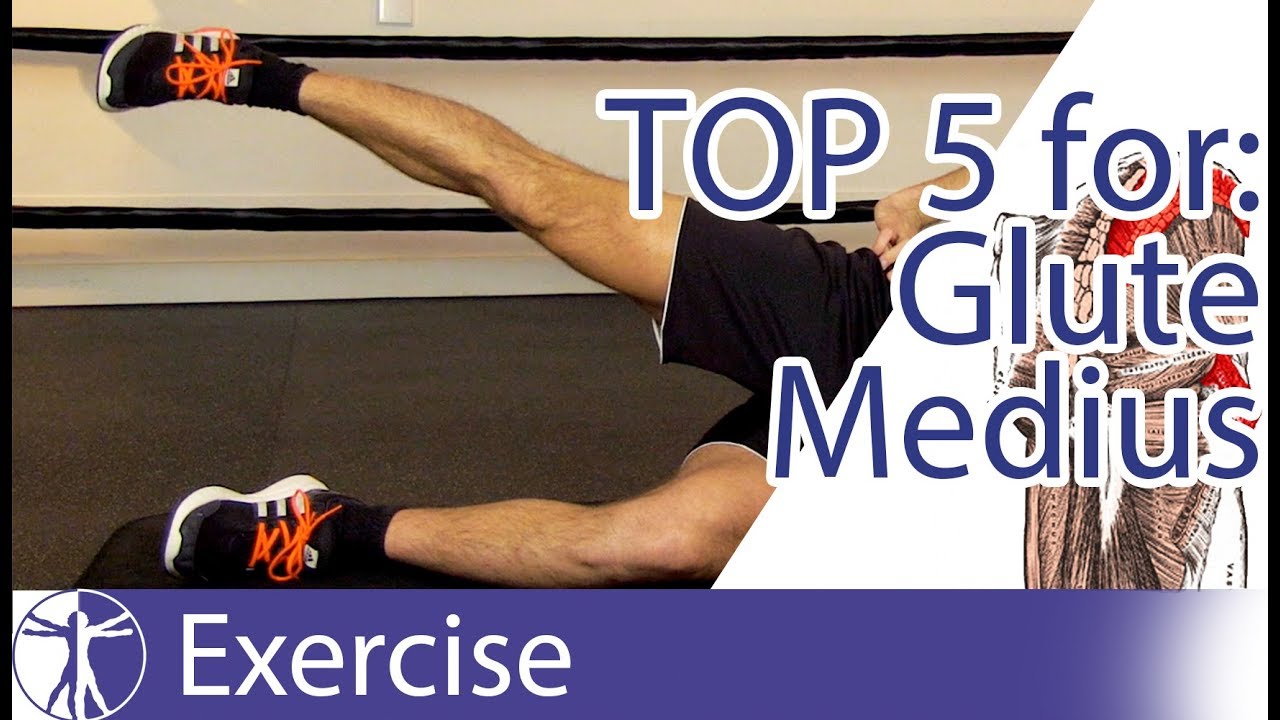
- Stretching: To prevent ITBS, it is important that the muscles around the knee and hip be in top condition. Be sure to work on the flexibility of all the muscle groups in the leg, especially the tensor fasciae latae and buttocks. See the videos below for two great ITB stretches for these muscle groups.

Standing TFL and ITB Stretch (1:24) Stand upright and cross one foot behind the other. Lean towards the foot that is behind the other. If necessary, hold onto something for balance. Hold the stretch position for a minimum of 20 seconds and then repeat with the opposite leg.

Lying Cross-over Knee Pull-down Stretch (1:27) Lie on your back and cross one leg over the other. Bring your foot up to your opposite knee and with your opposite arm pull your raised knee down towards the ground.
Research and References
- Bahr, R. Maehlum, S. (2004) Clinical Guide to Sports Injuries, 1st Edition (ISBN: 978-0736041171)
- Beachle, T. Earle, R. (2008). Essentials of Strength Training and Conditioning, 3rd Edition (ISBN: 978-0736058032)
- Beals, C. Flanigan, D. (2013). A Review of Treatments for Iliotibial Band Syndrome in the Athletic Population. Journal of Sports Medicine, Volume 2013, Article ID 367169.
- Demol, Y. Ackerman, A. (ND). Iliotibial Band Syndrome. Retrieved October 24, 2021, from https://www.physio-pedia.com/Iliotibial_Band_Syndrome.
- Hadeed A, Tapscott DC. (2021). Iliotibial Band Friction Syndrome. StatPearls.
- Lavine, R. (2010). Iliotibial band friction syndrome. Current Reviews in Musculoskeletal Medicine, vol. 3,1-4 18-22.
- Martini, F. Tallitsch, R. Nath, J. (2009) Human Anatomy, 9th Edition (ISBN: 978-013432076X)
- Pietrosimone, L. (May 21, 2020). Physical Therapy Guide to Iliotibial Band Syndrome (ITBS or “IT Band Syndrome”). Retrieved October 24, 2021, from https://www.choosept.com/guide/physical-therapy-guide-iliotibial-band-syndrome-itbs.
- Tortora, G. Derrickson, B. (2009) Principles of Anatomy and Physiology, 14th Edition (ISBN: 978-1118866096)
- Walker, B. (2018). The Anatomy of Sports Injuries, 2nd Edition (ISBN: 978-1623172831)
- Wikipedia contributors. (2020, December 5). Iliotibial band syndrome, In Wikipedia, The Free Encyclopedia.
 About the Author: Brad Walker is often referred to as the "Stretch Coach" and has even been called the Stretching Guru. Magazines such as Runners World, Bicycling, Triathlete, Swimming & Fitness, and Triathlon Sports have all featured his work. Amazon (author page) has listed his books on five Best-Seller lists. Google cites over 100,000 references to him and his work on the internet. And satisfied customers from 122 countries have sent 1,000's of verified customer reviews. If you want to know about stretching, flexibility or sports injury management, Brad Walker is the go-to-guy.
Disclaimer: The health and fitness information presented on this website is intended as an educational resource and is not intended as a substitute for proper medical advice. Please consult your physician or physical therapist before performing any of the exercises described on this website, particularly if you are pregnant, elderly or have any chronic or recurring muscle or joint pain.


