Groin Strain Treatment for a Pulled Groin Muscle
Learn the causes behind a pulled groin muscle, plus treatment and prevention tips for groin strain injury.
by Brad Walker | Updated June 30, 2021
Call it what you want: Groin strain; Pulled groin; Groin pull injury; or Adductor strain; the fact is, it’s a common muscle strain injury that is frequent in sports like soccer, basketball, football, track & field, and all sports that require rapid change of direction.
The groin, described as the junction between the lower limbs and torso, is vulnerable to a lot of different injuries, including hernias, stress fractures, and avulsion fractures. In this issue we’ll be focusing on one of the most common groin injuries; groin strain or a pulled groin muscle.

What is a Groin Pull?
Depending on the severity, a groin strain can range from a slight stretch, to a complete rupture of the muscles that attach the pubic bone (pelvis) to the thigh bone (femur). Injuries to the muscles and tendons of the groin are normally graded into three categories, as follows:
- A first-degree strain is the least severe. It is the result of some minor pulling or over-stretching of the muscles and tendons, and is accompanied by mild pain, some swelling and stiffness. There is usually very little loss of function as a result of a first-degree strain.
- A second-degree strain is the result of both pulling and some tearing of the muscles and tendons. There is increased swelling and pain associated with a second-degree strain, and a moderate loss of function.
- A third-degree strain is the most severe of the three. A third-degree strain is the result of a complete tear or rupture of one or more of the groin muscles and tendons. A third-degree strain will result in massive swelling, severe pain and gross instability.
A groin pull or strain specifically affects the “Adductor” muscles. These muscles are located on the inside of the thigh and help to bring the legs together.
The adductor muscles consist of “Adductor Brevis“, “Adductor Magnus” and “Adductor Longus,” all of which are displayed in the following picture. Adductor Longus has been cut to display the muscles underneath.
Of these three, it is Adductor Longus that is most susceptible to injury, and the most common place of injury on Adductor Longus is the point at which the muscle and tendon attach to the femur (thigh) bone.

What Causes a Groin Pull?
Competitors that participate in sports that require a lot of running or rapid change in direction are most susceptible to groin injuries. Other activities like kicking, jumping and rapid acceleration or deceleration also place a lot of strain on the groin muscles.
Another activity that puts a lot of strain on the groin is any movement that results in a sudden pressure being applied. Such as a fall, landing awkwardly, twisting, or bending while stress is applied to the groin muscles.
How to Prevent a Groin Pull?
Preventing a pulled groin muscle comes down to two simple factors. A thorough warm-up and physical conditioning, i.e. strength & flexibility.
- A thorough and correct warm-up will help to prepare the groin muscles and tendons for any activity to come. Always include a general warm-up, followed by an activity specific warm-up before training and especially before competition.
- Strengthening and conditioning the muscles of the groin will help to prevent groin strain. There are a number of specific strengthening exercises you can do for these muscles, like cable adductions and machine adductions. Watch the videos below for more groin strengthening exercises.


- Flexible muscles and tendons are extremely important in the prevention of most strain or sprain injuries. When muscles and tendons are tight and stiff, it is easy for those muscles and tendons to be pushed beyond their natural range of movement, which can cause strains, sprains, and pulled muscles. To keep your muscles and tendons flexible and supple, it is important perform regular groin stretches. Get videos and photos of groin and adductor stretches here.
A Complete Treatment and Management Plan for Groin Strain
The following is a very thorough and detailed management plan for the full recovery and rehabilitation of a groin strain. This management plan comes from one of my old university text books, called Principles of Athletic Training, by William E. Prentice and Daniel D. Arnheim. It’s one of those 900-page door-stoppers, but it’s a book I refer to often for information on sports injury prevention and rehabilitation. It’s extremely detailed and a valuable resource for anyone who works in the health and fitness industry.
Considering this management plan was written over ten years ago, my only addition would be the reduction of ice therapy after phase 2, and the addition of massage and heat therapy during the 2nd, 3rd, and 4th phases. Regardless of my suggestions though, the following will be extremely useful for anyone who is, or has suffered from a groin strain.
Injury Situation
A women varsity basketball player had a history of tightness in her groin. During a game she suddenly rotated her trunk while also stretching to the right side. There was a sudden sharp pain and a sense of “giving way” in the left side of the groin that caused the athlete to immediately stop play and limp to the sidelines.
Signs and Symptoms
As the athlete described it to the athletic trainer, there was severe pain when rotating her trunk to the right and flexing her left hip. Inspection revealed the following:
- There was major point tenderness in the groin, especially in the region of the adductor magnus muscle.
- There was no pain during passive movement of the hip, but severe pain did occur during both active and resistive motion.
- When the groin and hip were tested for injury, the hip joint, iliopsoas, and rectus femoris muscles were ruled out as having been injured; however, when the athlete adducted the hip from a stretch position, it caused here extreme discomfort.
Management Plan
Based on the athletic trainer’s inspection, with findings confirmed by the physician, it was determined that the athlete had sustained a second-degree strain of the groin, particularly to the adductor magnus muscle.
Phase 1
Management Phase: Goals: To control hemorrhage, pain and spasms. Estimated Length of Time (ELT): 2 to 3 days.
Therapy: Immediate Care: ICE-R (20 min) intermittently, six to eight times daily. The athlete wears a 6-inch elastic hip spica.
Exercise Rehabilitation: No Exercise – as complete rest as possible.
Phase 2
Management Phase: Goals: To reduce pain, spasm and restore full ability to contract without stretching the muscle. ELT: 4 to 6 days.
Therapy: Follow up care: Ice massage (1 min) three to four times daily. Bipolar muscle stimulation above and below pain site (7 min).
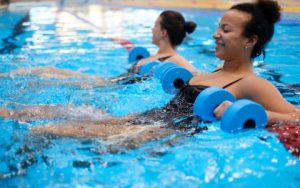
Exercise Rehabilitation: PNF for hip rehabilitation three to four times daily (beginning approx. 6 days after injury) Optional: Jogging in chest level water (10 to 20 min) one or two times daily. Must be done within pain free limits. General body maintenance exercises are conducted three times a week as long as they do not aggravate the injury.
Phase 3
Management Phase: Goals: To reduce inflammation and return strength and flexibility.
Therapy: Muscle stimulation using the surge current at 7 or 8, depending on athlete’s tolerance, together with ultrasound once daily and cold therapy in the form of ice massage or ice packs (7 min) followed by light exercise, two to three times daily.
Exercise Rehabilitation: PNF hip patterns two to three times daily following cold applications, progressing to progressive-resistance exercise using pulley, isokinetic, or free weight (10 reps, 3 sets) once daily. Optional: Flutter kick swimming once daily. General body maintenance exercises are conducted three times a week as long as they do not aggravate the injury.
Phase 4
Management Phase: Goals: To restore full power, endurance, speed and extensibility.
Therapy: If symptom free, precede exercise with ice massage (7 min) or ice pack.
Exercise Rehabilitation: Added to phase 3 program, jogging on flat course slowly progressing to a 3-mile run once daily and then progressing to figure-8s, starting with obstacles 10 feet apart and gradually shortening distance to 5 feet, at full speed.
Phase 5
Management Phase: Goals: To return to sport competition.
Exercise Rehabilitation: Athlete gradually returns to pre-competition exercise and a gradual return to competition while wearing a figure-8 elastic hip spica bandage for protection.
Criteria for Returning to Competition
- As measured by an isokinetic dynamometer, the athlete’s injured hip and groin should have equal strength to that of the uninjured hip.
- Hip and groin have full range of motion.
- The athlete is able to run figure-8s around obstacles set 5 feet apart at full speed.
Research and References
- Bahr, R. Maehlum, S. (2004) Clinical Guide to Sports Injuries, 1st Edition (ISBN: 978-0736041171)
- Beachle, T. Earle, R. (2008). Essentials of Strength Training and Conditioning, 3rd Edition (ISBN: 978-0736058032)
- Hamilton, A. Groin pain: risks and prevention. Retrieved April 18, 2021, from https://www.sportsinjurybulletin.com/groin-pain-risks-and-prevention/.
- Kiel, J. Kaiser, K. (2020). Adductor Strain. StatPearls, Jan, 2021.
- Martini, F. Tallitsch, R. Nath, J. (2009) Human Anatomy, 9th Edition (ISBN: 978-013432076X)
- Prentice, W. Arnheim, D. (2013) Principles Of Athletic Training, 15th Edition (ISBN: 978-0078022647)
- Serner, A. van Eijck, C. Beumer, B. Hölmich, P. Weir, A. de Vos, R. (2015). Study quality on groin injury management remains low: a systematic review on treatment of groin pain in athletes. British Journal of Sports Medicine, 49:813.
- Serner, A. Weir, A. Tol, J. Thorborg, K. Lanzinger, S. Otten, R. Hölmich, P.(2020). Return to Sport After Criteria-Based Rehabilitation of Acute Adductor Injuries in Male Athletes: A Prospective Cohort Study. Orthopaedic Journal of Sports Medicine, Volume: 8 issue: 1.
- Thorborg, K. Reiman, M. Weir, A. Kemp, J. Serner, A. Mosler, A. Hölmich, P. (2018). Clinical Examination, Diagnostic Imaging, and Testing of Athletes With Groin Pain: An Evidence-Based Approach to Effective Management. Journal of Orthopaedic & Sports Physical Therapy, 48(4): 239-249.
- Tortora, G. Derrickson, B. (2009) Principles of Anatomy and Physiology, 14th Edition (ISBN: 978-1118866096)
- Tyler, T. Silvers, H. Gerhardt, M. Nicholas, S. (2010). Groin Injuries in Sports Medicine. Sports Health, 2(3): 231-236.
- Walker, B. (2018). The Anatomy of Sports Injuries, 2nd Edition (ISBN: 978-1623172831)
 About the Author: Brad Walker is often referred to as the "Stretch Coach" and has even been called the Stretching Guru. Magazines such as Runners World, Bicycling, Triathlete, Swimming & Fitness, and Triathlon Sports have all featured his work. Amazon (author page) has listed his books on five Best-Seller lists. Google cites over 100,000 references to him and his work on the internet. And satisfied customers from 122 countries have sent 1,000's of verified customer reviews. If you want to know about stretching, flexibility or sports injury management, Brad Walker is the go-to-guy.
Disclaimer: The health and fitness information presented on this website is intended as an educational resource and is not intended as a substitute for proper medical advice. Please consult your physician or physical therapist before performing any of the exercises described on this website, particularly if you are pregnant, elderly or have any chronic or recurring muscle or joint pain.