Treating Fibromyalgia Syndrome (FMS)
Discover how to use gentle aerobic and stretching exercises to reduce the pain of Fibromyalgia.
by Brad Walker | Updated October 14, 2022
This pain and fatigue can affect the muscles, joints, tendons, ligaments, and other soft tissues, to the extent that any movement is a struggle.
Fibromyalgia is 7 to 9 times more common in women than in men, and is commonly diagnosed between the ages of 30 and 50.

Causes of Fibromyalgia
The cause of fibromyalgia is still unknown, although many research papers commonly refer to four possible contributing factors:
- Toxicity, due to long term exposure to chemicals, pesticides, insecticides, etc.
- Traumatic experiences and lifelong stress, possibly from a pre-existing medical condition or illness.
- Genetic susceptibility.
- Immunological breakdown, due to prior bacterial or viral infection.
Whatever the underlying causes of the disorder, they are yet incurable and so treatment and management of the symptoms is seen as the key to relief. Surprisingly, exercise has been found to be beneficial with regards to reducing the pain and fatigue associated with fibromyalgia, and so a regular exercise regimen needs to be tailored to each individual sufferers needs.
Signs and Symptoms
The major symptoms used to diagnose fibromyalgia include:
- Pain and tenderness in at least 11 of the 19 pre-determined sensitive spots of the body
- Stiffness of the joints
- Fatigue and tiredness
- Sleep disorders
- Depression and anxiety
- Headaches, including migraines
Many individuals diagnosed with FMS suffer with all or many of these symptoms, however because fibromyalgia is a relatively new disorder many physicians mistake it for other, more common disorders, like Chronic Fatigue Syndrome (CFS).

Precautions, Limitations and Dangers
An exercise plan for people diagnosed with fibromyalgia needs to cater for the individual’s level of fitness, mobility and experience.
Because many of the joints, muscles, ligaments and tendons will be affected by fibromyalgia only low impact or non-impact exercise routines should be practiced. This acts to reduce any additional stress that would normally be placed on already tender and painful spots.
Each case of fibromyalgia is different, for example, one person may only have pain in their leg muscles and joints whereas a second person may have all-over pain, and this will inevitably affect the type and intensity of the exercises performed. All people with fibromyalgia should know their limitations and should stick to exercises that they know won’t exacerbate their main symptoms.
Over exercising will often cause pain and soreness in even the healthiest of people. It is important for sufferers of fibromyalgia to increase their levels of exercise very slowly and only push themselves as far as is comfortable.
The Best Type of Exercise for Fibromyalgia
Non-impact and low impact aerobic exercise has been found to be very beneficial for sufferers of fibromyalgia. The cardiovascular training involved with aerobic exercise has been shown to significantly reduce the degree of pain and stiffness experienced by sufferers.
Light Aerobics
For those who can manage it, low impact aerobics sessions, which can include activities such as brisk walking, cycling, using a Stairmaster, etc. can be particularly good for reducing all levels of pain. Aerobic exercise should be performed 3-4 time per week, for around 30 minutes per session. However, it is very important not to rush into things and stress the muscles and joints unnecessarily.
It is advised that fibromyalgia sufferers start with a simple 5-minute walk and build up gradually until they reach the 30-minute target. Pre-exercise stretches are also highly recommended as this helps to make the exercise session more comfortable and reduces the risk of injury.
Aqua Aerobics
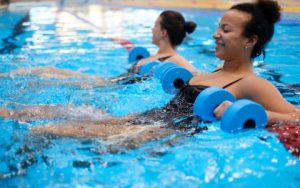
Water makes the body weightless and so any form of swimming or aerobic activity in water greatly benefits people with painful muscles and joints. This non-impact form of exercise takes all the strain off the joints, meaning that for a time they don’t have to bear the weight of the body. This is perfect for fibromyalgia sufferers with very tender body areas who get excruciating waves of pain with every jolt. It is important however that the swimming water is warm because cold water can cause the muscles and joints to seize up and become more painful.
Stretching
Stretching, as it relates to physical health and fitness, is the process of placing parts of the body into a position that will lengthen the muscles and associated soft tissues. It can be performed in the privacy of the home or at the gym where a qualified instructor can demonstrate the correct way to stretch so that the maximum benefit is achieved.
As with most activities there are rules and guidelines to ensure that they are safe, and stretching is no exception. It can be extremely dangerous and harmful if done incorrectly. Please review the stretching guidelines here, both for safety and for maximizing the potential benefits.
Research and References
- Chinn, S. Caldwell, W. Gritsenko, K. (2016). Fibromyalgia Pathogenesis and Treatment Options Update. Current Pain and Headache Reports, 20(4).
- Martini, F. Tallitsch, R. Nath, J. (2009) Human Anatomy, 9th Edition (ISBN: 978-013432076X)
- Okifuji, A. Gao, J. Bokat, C. Hare, BD. (2016). Management of fibromyalgia syndrome in 2016. Pain Management, 6(4):383-400.
- Rossy, LA. Buckelew, SP. Dorr, N. Hagglund, KJ. Thayer, JF. McIntosh, MJ. Hewett, JE. Johnson, JC. (1999). A meta-analysis of fibromyalgia treatment interventions. Annals of Behavioral Medicine, 21(2):180-91.
- Tortora, G. Derrickson, B. (2009) Principles of Anatomy and Physiology, 14th Edition (ISBN: 978-1118866096)
- Walker, B. (2011). The Anatomy of Stretching, 2nd Edition (ISBN: 978-1583943717)
- Wikipedia contributors. (2022, September 11). Fibromyalgia, In Wikipedia, The Free Encyclopedia.
- Yunus, MB. (2001). The role of gender in fibromyalgia syndrome. Current Rheumatological Reports, 3(2):128-34.
 About the Author: Brad Walker is often referred to as the "Stretch Coach" and has even been called the Stretching Guru. Magazines such as Runners World, Bicycling, Triathlete, Swimming & Fitness, and Triathlon Sports have all featured his work. Amazon (author page) has listed his books on five Best-Seller lists. Google cites over 100,000 references to him and his work on the internet. And satisfied customers from 122 countries have sent 1,000's of verified customer reviews. If you want to know about stretching, flexibility or sports injury management, Brad Walker is the go-to-guy.
Disclaimer: The health and fitness information presented on this website is intended as an educational resource and is not intended as a substitute for proper medical advice. Please consult your physician or physical therapist before performing any of the exercises described on this website, particularly if you are pregnant, elderly or have any chronic or recurring muscle or joint pain.