Core Stability and Core Exercises for Injury Prevention
Maximize your core stability and prevent sports injury.
by Brad Walker | Updated January 10, 2024
Core stability deals with the proper coordination of the key muscles used to support the spinal column in its natural curve.
Core stability is essential for proper form and mechanics while performing any movement; from walking and standing, to advanced sports skills. It is also important for injury prevention and protecting the spine during those activities.

What is Core Stability?
Core stability is the coordinated effort of the deep muscles of the trunk, pelvis, hips, the abdominal muscles and the small muscles along the spinal column. These muscles contract together to create force used to hold the spinal column in alignment.
The strength of these muscles is less important than their endurance and co-contraction. Since these muscles must stabilize the spinal column during all movement they must have good endurance with enough strength to counter forces placed on them during extreme activities. The muscles must be equal in strength and contract in correct proportions to maintain the proper posture of the spine during all activities.
From Wikipedia, the free encyclopedia…
“In kinesiology, core stability is a person’s ability to stabilize their core (all parts of the body which are not limbs). Stability, in this context, should be considered as an ability to control the position and movement of the core. Thus, if a person has greater core stability, they have a greater level of control over the position and movement of this area of their body. The body’s core is frequently involved in aiding other movements of the body, such as running; thus it is known that improving core stability also improves a person’s ability to perform these other movements.”
Anatomy Involved
The deep muscles of the trunk and hip region are involved in core stability. The transversus abdominus (TA), multifidus (MF), internal and external obliques, rectus abdominis, erector spinae, the diaphragm, and the muscles of the pelvic floor are all essential for core stability.
It has been shown that TA and MF contract simultaneously when movement of the limbs is anticipated, which stabilizes the spine and creates a solid base for all movement.

How do you Improve Core Stability?
It is important to differentiate between core strengthening and core stability. Core stability deals with the ability to stabilize the spinal column during all movements. This does not necessarily pertain to the strength of the muscles or force of their contraction.
The muscles involved are also different:
- Core strength deals with the superficial muscles of the core; the abdominals, gluteals, adductors, abductors, the spinal erectors, and other trunk and hip muscles.
- Core stability deals with the deeper trunk and hip muscles.
Improving core stability requires working the muscles in their specific function. These muscles are stabilizer muscles and therefore contract with a static or isometric contraction. They do not move, which means they must be worked with both static and dynamic exercises.
These muscles are under static stress all day long. This requires a high degree of endurance, along with adequate strength to handle sport or fitness-related movements. The exercises must stress endurance under increasing workloads to focus on gradual strengthening of the muscles while enhancing endurance.
Finally, the muscles must be worked in their correct anatomical position. The spine has a natural S-curve that is designed to absorb shock and hold the body in correct alignment. Exercises for core stability must place the spine in its neutral position to ensure adequate involvement of all the muscles.
Precautions and Safety Guidelines
Core exercises are a great tool for injury prevention; however, becoming injured during core training obviously defeats this purpose. Below are some important precautions and safety guidelines to adhere to while performing any core stability exercises.
- Start with static exercises, to work on the endurance of the muscles. This is a safe way to start building stability and co-ordination.
- When exercising to improve core stabilization it is essential that activities be done in correct alignment. It is also important that all the muscles be recruited together and in correct proportions.
- Gradually increase the difficulty with other joint and muscle involvement, as your comfort level increases.
- Make sure you know the proper techniques before commencing any core exercise.
- Adequately warm-up before a core workout.
- Work on improving flexibility around the lower back, hips and core, as this will help prevent injury and enhance the mobility and function of the core muscles.
Start with this Core Exercise
Core stability starts with recruiting the transversus abdominus (TA) and the multifidus (MF) muscles, and you can train your body to do this with a technique called “Hollowing.”
To do this you lie on your back on the floor with your knees bent. There should be a natural space between your lumbar region and the floor. Breathe in deeply while relaxing your abdominal muscles. Breathe out while pulling your navel back toward your spine. Hold the contraction for 10 seconds, staying relaxed and allowing yourself to breathe in and out while holding the tension. Repeat this for 5 to 10 repetitions. Once you can accomplish this activity successfully you can progress to more advanced core exercises.

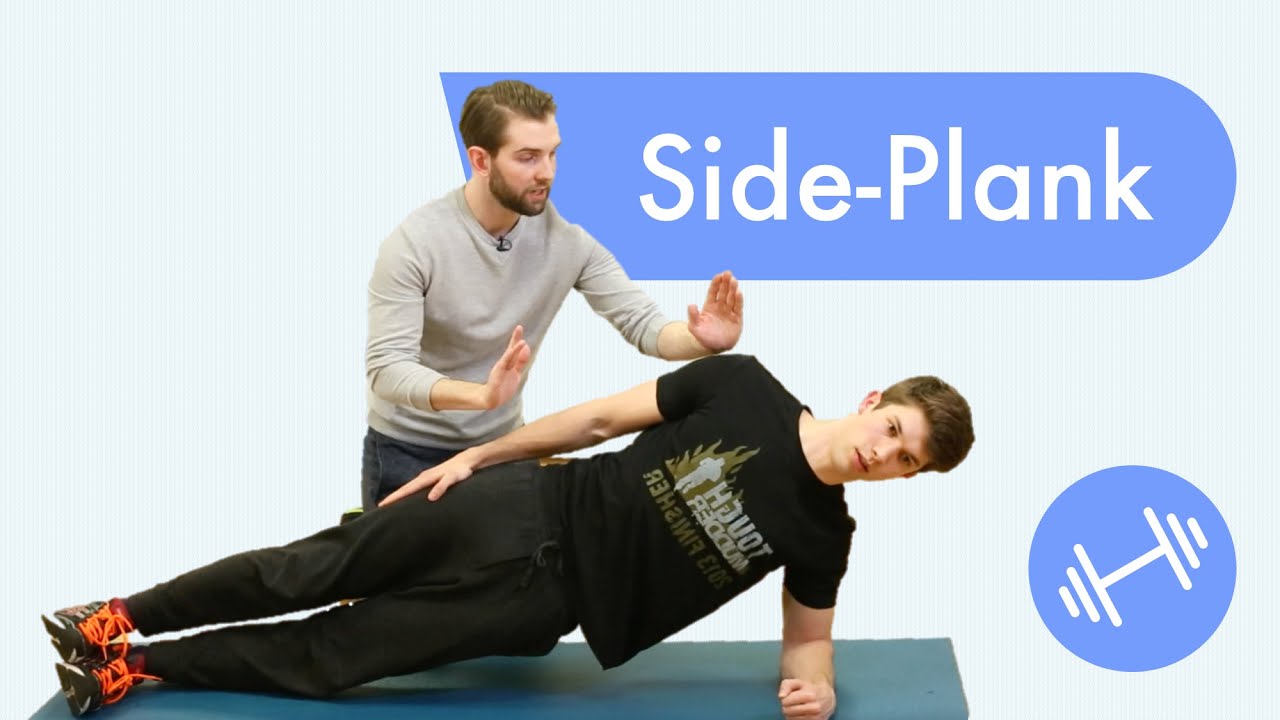
Body Weight Core Stability Exercises
These exercises can be either static or dynamic, meaning holding a contraction without movement or moving through a range of motion while stabilizing the core.

Swiss Ball Core Stability Exercises
The Swiss Ball adds an extra dimension to core stability training by adding the balance element. As with body weight exercises, these exercises come in static or dynamic varieties as well.

A good example of a dynamic Swiss Ball exercise is the Gluteal Bridge. Place your head and shoulders on top of the Swiss Ball with your feet on the floor (hip-width apart). Slowly lift the hips, using the muscles of the hips and spinal column, until there is a straight line through the knees, hips and shoulders (do not raise the hips too high). Hold for 30 seconds and repeat for 2 to 3 repetitions.

Knee Tucks are another good dynamic Swiss Ball exercise. Place your shins on the Swiss Ball and your hands on the floor under your shoulders in the push-up position. Set the lumbar spine in a neutral position and make sure the shoulders are stable. Roll your legs backward over the ball, maintaining a straight body position and good spinal alignment. Continue to brace the abdominals and pull yourself back to the beginning position. Do 2 to 3 sets of 5 to 10 repetitions.
Research and References
- Beachle, T. Earle, R. (2008). Essentials of Strength Training and Conditioning, 3rd Edition (ISBN: 978-0736058032)
- Elphinston, J. Pook, P. (2010). Core Workout: A Definitive Guide to Swiss Ball Training for Athletes, Coaches & Fitness Professionals, 4th Edition (ISBN: 978-1905367108)
- Huxel Bliven, K. Anderson, B. (2013). Core Stability Training for Injury Prevention. Sports Health, 5(6): 514–522.
- Okada, T. Huxel, K, Nesser, T. (2011). Relationship Between Core Stability, Functional Movement, and Performance. Journal of Strength and Conditioning Research, 25(1) 252-261.
- Peate, W. Bates, G. Lunda, K. Francis, S. Bellamy, K. (2007). Core strength: A new model for injury prediction and prevention. Journal of Occupational Medicine and Toxicology, 2, 3.
- Silfies, S. Ebaugh, D. Pontillo, M. Butowicz, C. (2015). Critical review of the impact of core stability on upper extremity athletic injury and performance. Brazilian Journal of Physical Therapy, 19(5), 360-368.
- Starrett, K. Cordoza, G. (2015). Becoming a Supple Leopard, 2nd Edition (ISBN: 978-1628600834)
- Wikipedia contributors. (2023, September 11). Core stability, In Wikipedia, The Free Encyclopedia.
 About the Author: Brad Walker is often referred to as the "Stretch Coach" and has even been called the Stretching Guru. Magazines such as Runners World, Bicycling, Triathlete, Swimming & Fitness, and Triathlon Sports have all featured his work. Amazon (author page) has listed his books on five Best-Seller lists. Google cites over 100,000 references to him and his work on the internet. And satisfied customers from 122 countries have sent 1,000's of verified customer reviews. If you want to know about stretching, flexibility or sports injury management, Brad Walker is the go-to-guy.
Disclaimer: The health and fitness information presented on this website is intended as an educational resource and is not intended as a substitute for proper medical advice. Please consult your physician or physical therapist before performing any of the exercises described on this website, particularly if you are pregnant, elderly or have any chronic or recurring muscle or joint pain.