6 Best Hamstring Stretches and Exercises
Hamstring stretches to improve your hamstring flexibility and relieve tight hamstring muscles.
by Brad Walker | Updated August 25, 2024
- Kneeling Hamstring Stretch
- Standing Leg-up Hamstring Stretch
- Kneeling Toe-up Hamstring Stretch
- Sitting Single Leg Hamstring Stretch
- Partner Assisted Hamstring Stretch
- Bent Knee Hamstring Stretch
Hamstring stretches are important for the flexibility and range of motion of the hip and hamstring muscles. Good hamstring flexibility allows for unrestricted, pain free movement of the hip and upper leg, which is vital for reducing the incidents of hamstring injury.
Sports that Benefit from Hamstring Stretches
Sports that benefit from the hamstring stretches below include: Basketball and Netball; Cycling; Hiking, Backpacking, Mountaineering and Orienteering. Ice Hockey and Field Hockey; Ice Skating, Roller Skating and Inline Skating; Martial Arts; Running, Track and Cross Country.
Running sports like Football, Soccer, Gridiron, and Rugby also benefit from regular hamstring stretching. Snow Skiing and Water Skiing; Surfing; Walking and Race Walking, and any sport that involves jumping or explosive movement.

Hamstring Muscles being Stretched
While performing the hamstring stretches below there are a number of muscles within the hip and upper leg that are stretched. Below is a comprehensive list of the anatomical muscle names involved in the following hamstring stretches.
- Semimembranosus (Medial hamstring);
- Semitendinosis (Medial / central hamstring);
- Biceps Femoris (Lateral hamstring);
- Gastrocnemius (Upper calf); and the
- Gluteus Maximus (Buttocks).
Hamstring Stretching Safety Guidelines
As with most activities there are rules and guidelines to ensure that they are safe. Stretching is no exception. Stretching can be extremely dangerous and harmful if done incorrectly. It is vitally important that the following guidelines be adhered to, both for safety and for maximizing the potential benefits of stretching.
- Always warm-up before performing any calf stretching exercises.
- Breathe. Don’t hold your breath. Holding your breath can raise your blood pressure, if you do suffer from high blood pressure. In any event, it makes you more tense. The deeper you breathe, the more relaxed you are, the deeper and longer you will be able to stretch.
- Never force a stretch beyond the point of mild discomfort. Stretching tight muscles will be uncomfortable, but you should never feel any sharp or sudden pain. If you do, stop immediately; you are pushing yourself too far.
- Be consistent. Stretching for a few minutes each day will gradually build flexibility and range of motion. This is far preferable to stretching only once a week for a longer time.
- Wear loose comfortable clothing. It’s obviously very difficult to stretch if your clothes are tight and restrict movement.
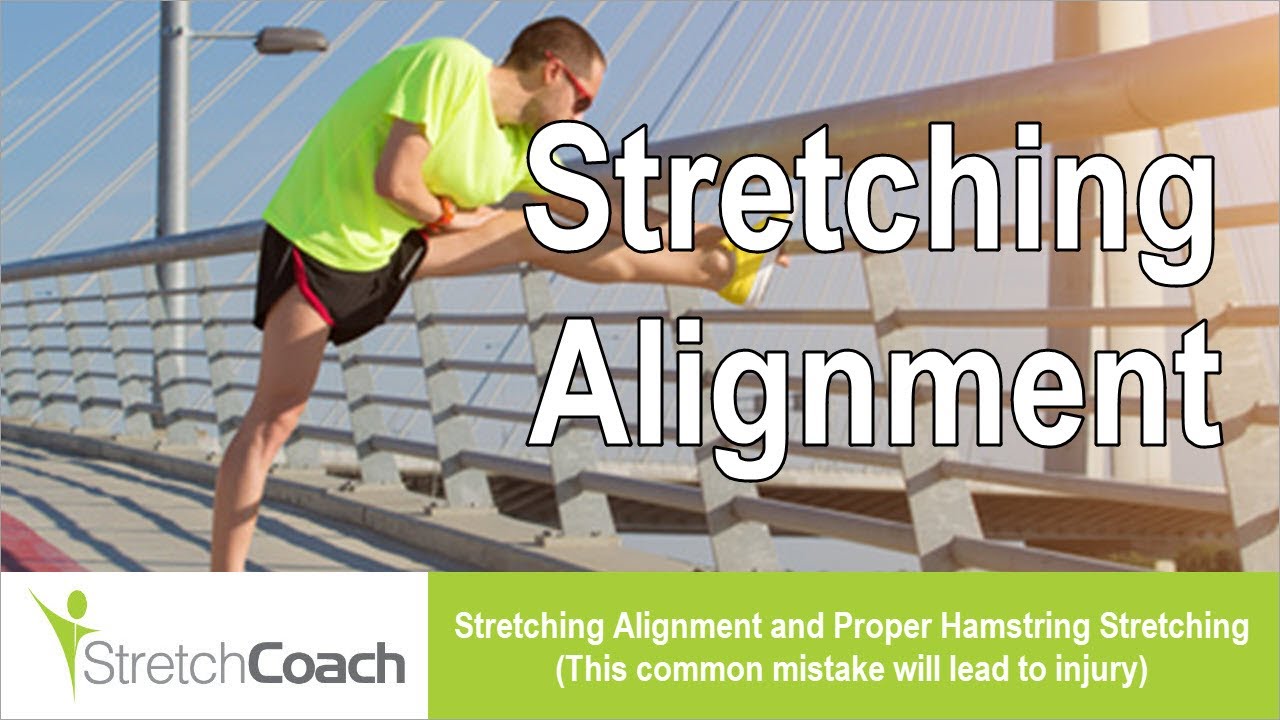
Stretching Alignment and Proper Hamstring Stretching
The position of your hip, leg and foot are vitally important for effective hamstring stretching. Positioning your body in the wrong way can lead to imbalances within the individual muscle groups, which can lead to injury. Watch the video below to see how to align your body for proper hamstring stretching.
Sample Hamstring Stretches
Slowly move into the stretch position until you feel a tension of about 7 out of 10. If you feel pain or discomfort you’ve pushed the stretch too far; back out of the stretch immediately. Hold the stretch position for 20 to 30 seconds while relaxing and breathing deeply. Come out of the stretch carefully and perform the stretch on the opposite side if necessary. Repeat 2 or 3 times.
As with any sport or activity there are rules and guidelines to ensure that they are safe. Stretching is no exception. Stretching can be harmful and cause injury if done incorrectly. It is vitally important that the following stretching guidelines be adhered to, both for safety and for maximizing the benefits of the stretches below.
Important: Keep your back straight! It’s very important that you keep your back straight and your head up while doing the following hamstring stretches. This will help to isolate and specifically target your hamstring muscles.
Kneeling Hamstring Stretch
Kneel down on one knee and place your other leg straight out in front with your heel on the ground. Keep your back straight. Make sure your toes are pointing straight up and gently reach towards your toes with one hand. Use your other arm for balance. Hold this stretch for about 20 to 30 seconds and repeat at least 2 to 3 times on each side.

Standing Leg-up Hamstring Stretch
Stand with one foot raised onto a chair, fence railing or similar object. Keep your raised leg slightly bent, with your toes on the edge of the chair. Let your heel drop off the edge of the chair. Keep your back straight and gently move your chest towards your raised leg. As above, hold this stretch for about 20 to 30 seconds and repeat at least 2 to 3 times on each side.

Sample Hamstring Stretching Videos
Below you’ll find a few good stretches for your hamstrings. But don’t rely on just a few stretches; it’s important to do a range of stretches for the hips, buttocks, groin and calf. Please be careful, if you haven’t stretched your hamstring muscles, some of these stretches will put a lot of stress on the hamstring tendons. Warm-up first, then proceed in a gradual and gently way.
Kneeling Toe-up Hamstring Stretch
Kneel on one knee and place your other leg straight forward with your heel on the ground. Keep your back straight and point your toes towards your body. Reach towards your toes with one hand. It’s not important to be able to touch your toes. Concentrate on keeping your back straight and your toes pointing up. Hold the stretch position for about 20 to 30 seconds and then repeat with the opposite leg (1:24).

Sitting Single Leg Hamstring Stretch
Sit with one leg straight out in front and toes pointing upwards. Bring your other foot towards your knee. Let your head fall forward and reach towards your toes with both hands. It’s important to keep your toes pointing straight upwards. Letting your toes fall to one side will cause this stretch to put uneven tension on the hamstring muscles. Over an extended period of time, this could lead to a muscle imbalance. Hold the stretch position for about 20 to 30 seconds and then repeat with the opposite leg (1:24).

Partner Assisted Hamstring Stretch
Lie on your back and keep both legs straight. Have a partner raise one of your legs off the ground and as far back as is comfortable. Make sure your toes are pointing directly backwards. Choose your stretching partner carefully. They are responsible for your safety while performing this stretch, so make sure you communicate clearly with them at all times. Hold the stretch position for about 20 to 30 seconds and then repeat with the opposite leg (0:53).

Bent Knee Hamstring Stretch
Lie on your back and bend one leg. Pull the other knee towards your chest, then slowly and gently straighten your raised leg. Keep your upper leg (thigh) relatively still, and regulate the intensity of this stretch by straightening your knee. Hold the stretch position for about 20 to 30 seconds and then repeat with the opposite leg (1:28).

Research and References
- Walker, B. (2011). The Anatomy of Stretching, 2nd Edition (ISBN: 978-1583943717)
- Wikipedia contributors. (2019, May 8). Hamstring, In Wikipedia, The Free Encyclopedia.
- Jones, O. (May 2, 2018). Muscles in the Posterior Compartment of the Thigh. Retrieved May 16, 2019, from https://teachmeanatomy.info/lower-limb/muscles/thigh/hamstrings/.
- Medeiros, D. Cini, A. Sbruzzi, G. Lima, C. (2016). Influence of static stretching on hamstring flexibility in healthy young adults: Systematic review and meta-analysis. Physiotherapy Theory and Practice, 32(6):438-445.
- Bandy, W. Irion, J. Briggler, M. (1998). The Effect of Static Stretch and Dynamic Range of Motion Training on the Flexibility of the Hamstring Muscles. Journal of Orthopaedic & Sports Physical Therapy, 27(4) 295–300.
- Worrell, T. Smith, T. Winegardner, J. (1994). Effect of Hamstring Stretching on Hamstring Muscle Performance. Journal of Orthopaedic & Sports Physical Therapy, 20(3) 154–159.
- O’Sullivan, K. Murray, E. Sainsbury, D. (2009). The effect of warm-up, static stretching and dynamic stretching on hamstring flexibility in previously injured subjects. BMC Musculoskeletal Disorders, 10:37.
- Fasen, J. O’Connor, A. Schwartz, S. Watson, J. Plastaras, C. Garvan, C. Bulcao, C. Johnson, S. Akuthota, V. (2009). A Randomized Controlled Trial of Hamstring Stretching: Comparison of Four Techniques. Journal of Strength and Conditioning Research, 23(2) 660-667.
- Castellote-Caballero, Y. Valenza, M. Puentedura, E. Fernández-de-las-Peñas, C. Alburquerque-Sendín, F. (2014). Immediate effects of neurodynamic sliding versus muscle stretching on hamstring flexibility in subjects with short hamstring syndrome. Journal of Sports Medicine, Article ID 127471.
- Cayco, C. Labro, A. Gorgon, E. (2016). Effects of proprioceptive neuromuscular facilitation on hamstrings flexibility in adults: a systematic review with meta-analysis. Physiotherapy Journal, 102(1) e190.
 About the Author: Brad Walker is often referred to as the "Stretch Coach" and has even been called the Stretching Guru. Magazines such as Runners World, Bicycling, Triathlete, Swimming & Fitness, and Triathlon Sports have all featured his work. Amazon (author page) has listed his books on five Best-Seller lists. Google cites over 100,000 references to him and his work on the internet. And satisfied customers from 122 countries have sent 1,000's of verified customer reviews. If you want to know about stretching, flexibility or sports injury management, Brad Walker is the go-to-guy.
Disclaimer: The health and fitness information presented on this website is intended as an educational resource and is not intended as a substitute for proper medical advice. Please consult your physician or physical therapist before performing any of the exercises described on this website, particularly if you are pregnant, elderly or have any chronic or recurring muscle or joint pain.